
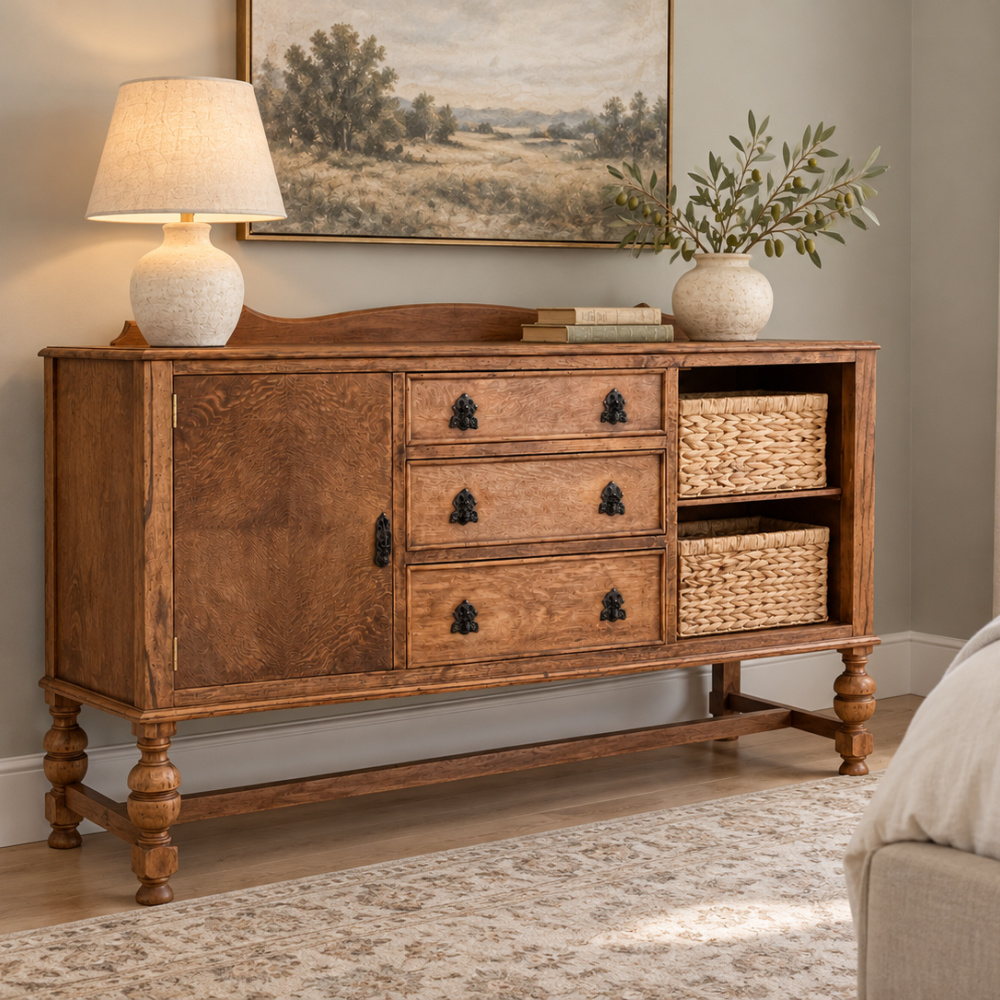
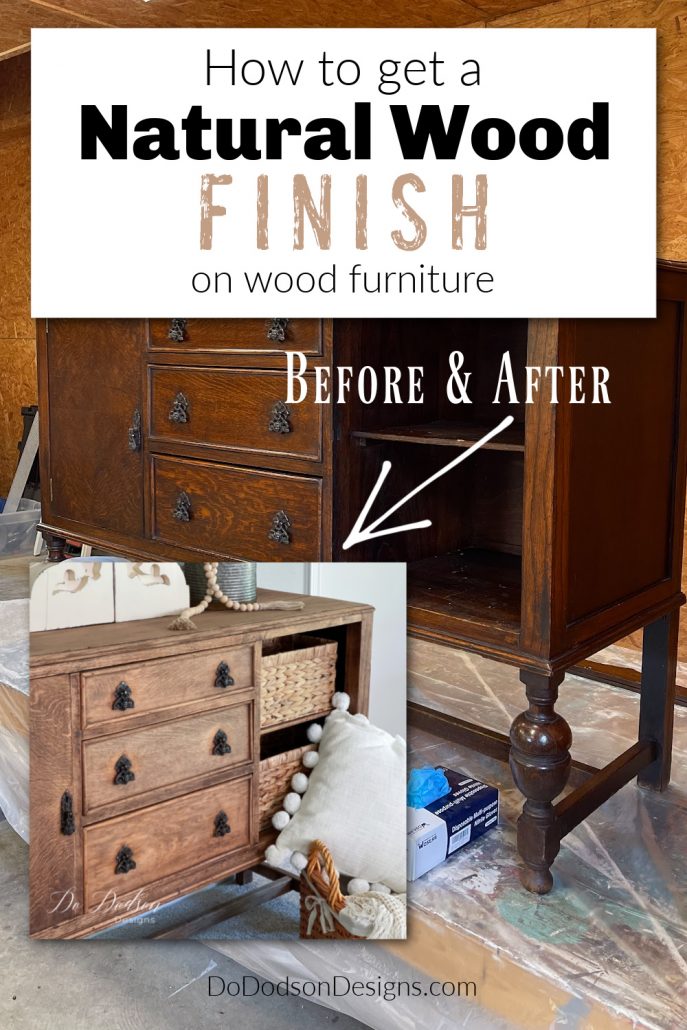
Learning how to get a natural wood finish on furniture can completely transform an outdated piece while allowing the beauty of the original wood to shine. In this tutorial, I’ll show you how I removed the old dark varnish from this vintage sideboard, smoothed the raw wood, and created a beautifully light, natural finish—without endless sanding. I’ll also share how the unsealed wood has held up after several years of use.
Updated September 2026: I originally shared this natural wood furniture makeover in 2022. I’ve updated the tutorial with clearer instructions, additional tips, and a look at how the unfinished wood has held up over time.
* As an Amazon Associate, I earn from qualifying purchases and through other companies as well. You will not be charged extra when you purchase through these links, but any income I make helps me create more amazing DIY projects to share with you! To see my full disclaimer, click here!
Natural Wood Finish—Sanding vs. Stripping
I had been using this antique sideboard as a dresser for quite some time, but its dark varnish hid the beautiful wood underneath. Instead of painting it, I decided to remove the old finish and give the piece the lighter, natural wood look I had been dreaming about.
You can remove an old furniture finish by sanding, stripping, or using a combination of both. The right method depends on the condition of the furniture, the thickness of the existing finish, and whether the piece has detailed areas or thin wood veneer.
Sanding works best when:
- The furniture has large, flat, solid-wood surfaces.
- The existing finish is thin or already worn.
- You want more control over how much wood is removed.
- You have an electric sander with dust collection.
Furniture stripper works best when:
- The piece has carvings, trim, grooves, or detailed areas.
- The old varnish is thick or difficult to sand.
- You need to work around hardware or delicate edges.
- Sanding could damage thin veneer.
For this makeover, I chose a furniture stripper because the sideboard had detailed areas that would have been difficult to sand evenly. I still used fine-grit sandpaper afterward to smooth the raised wood grain and prepare the surface.
Important: Always determine whether your furniture is solid wood or wood veneer before sanding. Aggressive sanding can quickly cut through thin veneer and permanently damage the surface.
Supplies Needed for a Natural Wood Furniture Makeover
- Wood furniture with a removable painted, stained, or varnished finish
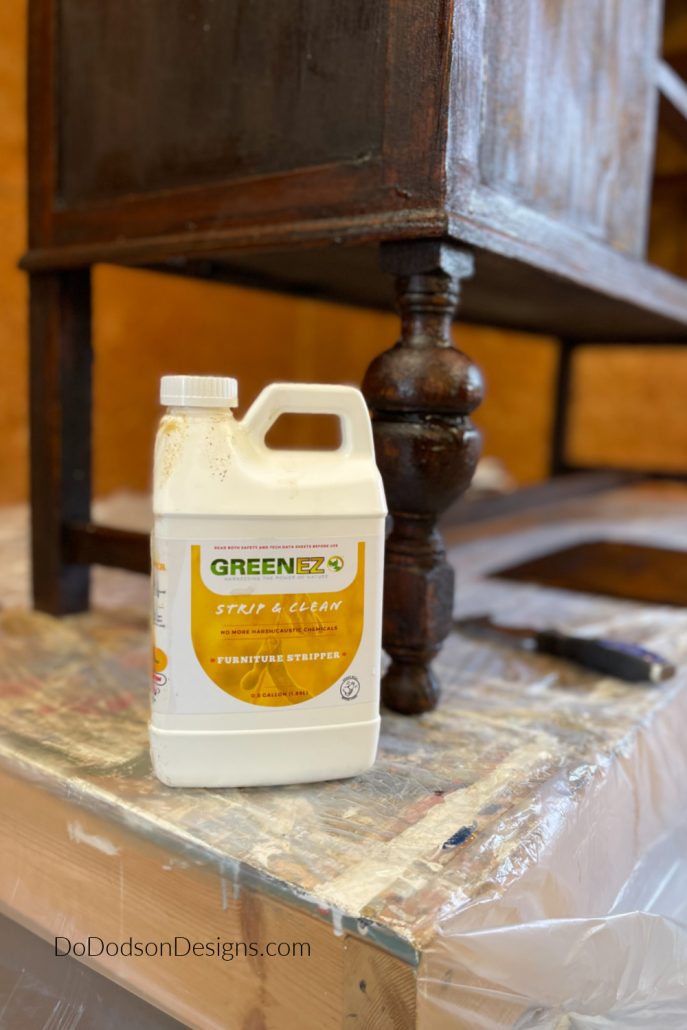
- Furniture stripper appropriate for wood (non-toxic)
- Disposable chip brush
- Plastic or metal paint scraper, as recommended by the stripper manufacturer
- Scouring pads or a small detail brush
- Chemical-resistant gloves
- Protective eyewear
- Protective clothing
- Drop cloth or heavy plastic sheeting
- Paper towels or disposable rags
- A lined container for collecting the removed finish
- 220-grit sandpaper
- Electric sander with dust collection, optional
- Clean, lint-free cloths
Safety note: Always read and follow the furniture stripper manufacturer’s directions. Work in a well-ventilated area, wear the recommended protective equipment, and follow local guidelines when disposing of the removed finish and used materials.
Step 1: Inspect, Test, and Prepare the Furniture
Before applying the stripper, inspect the furniture for loose veneer, damaged wood, or areas that may not withstand vigorous scraping and scrubbing. Make any necessary structural repairs and remove the hardware whenever possible.
Clean away surface dirt, grease, and wax so the stripper can work directly on the existing finish. Allow the furniture to dry completely before continuing.
Test the stripper on a small, hidden area first. This will show you how the existing finish reacts and whether the wood underneath is suitable for the natural look you want. Different wood species—and even different sections of the same piece—can reveal unexpected colors and undertones once stripped.
Important: If your furniture has an old painted finish, determine whether lead could be present before sanding or scraping it. The EPA recommends testing painted surfaces of uncertain age and using lead-safe practices. This project had a varnished wood finish rather than a painted surface. Read the EPA’s lead-safety guidance.
Step 2: Apply the Furniture Stripper
Before applying the furniture stripper, read the manufacturer’s directions for application, wait time, cleanup, and disposal. Directions can vary considerably between products, so always follow the instructions on your specific container.
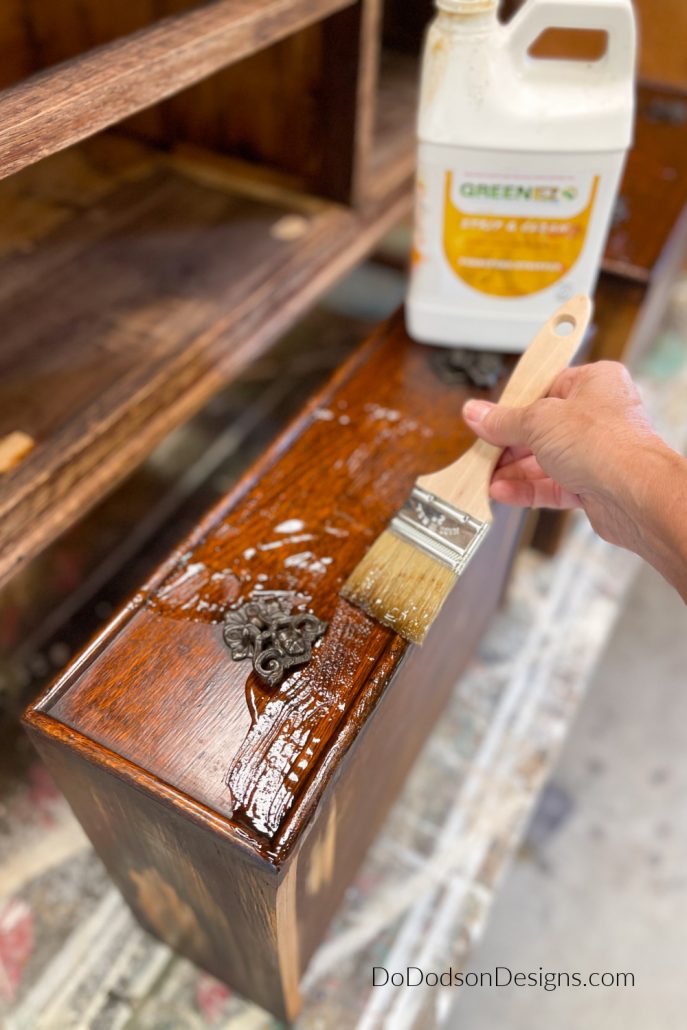
Shake or stir the product if directed. Using a disposable chip brush, apply a thick, even layer over the existing finish. Avoid repeatedly brushing over the same area because that can cause the stripper to dry too quickly.
The stripper I used recommended allowing it to remain on the furniture for two to four hours. It has a long wet time, which gave the product time to soften and loosen the old varnish. A furniture stripper generally works only while it remains wet, so don’t rush to remove it unless the manufacturer instructs you to do so.
The original hardware on this piece could not be removed without risking damage, so I carefully worked around it. If your hardware can be removed safely, doing so will make the stripping process easier and help protect the metal finish.
Then I waited for the magic to happen—and did a little daydreaming about that beautiful natural wood hiding underneath.
Step 3: Remove the Old Finish
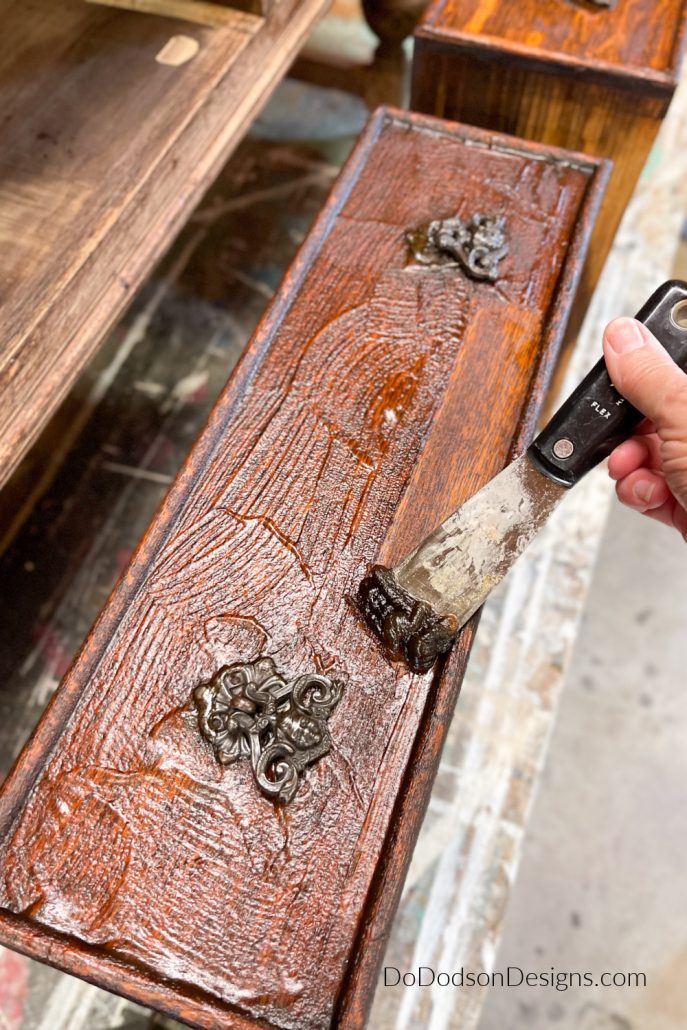
After about two hours, I tested a small area with my paint scraper. The old varnish had softened and lifted easily, which told me the stripper was ready to remove. If the finish does not release without a lot of pressure, give the product more time according to the manufacturer’s directions.
Working in the direction of the wood grain, gently scrape away the softened finish. Hold the scraper at a low angle to avoid gouging or scratching the wood. A plastic scraper is the gentler option, especially when working with veneer or softer wood.
And yes, prepare yourself for an oopy-goopy mess! I lined a container and used paper towels to collect the loosened varnish as I worked. Keeping the mess contained made cleanup much easier.
The stripper was still wet when I removed it, which helped the old finish release without excessive scraping. Continue working in manageable sections until you have removed as much of the softened varnish as possible.
Disposal tip: Don’t place wet stripper residue directly into your household trash. Follow the product label and your local waste-disposal requirements.
Step 4: Clean Away the Remaining Stripper
After removing as much varnish as possible with the scraper, I needed to clean the remaining stripper and softened finish from the wood. The correct cleanup method varies by product, so follow the manufacturer’s directions to determine whether you should use water, mineral spirits, or another recommended cleaner.
For this makeover, I used a water-based stripper and cleaned the solid-wood piece outdoors. Using a scouring pad, spray nozzle, and toothbrush for the detailed areas, I gently scrubbed away the remaining residue.
I know what you’re thinking—I gave the furniture a bath! It was also about 100 degrees outside, so apparently we were both getting the full Texas spa treatment.
As I scrubbed, I rinsed the loosened residue away and watched the remaining varnish disappear. The wet wood initially looked much darker, but it lightened considerably as it dried.
Important: Saturating furniture with water can swell the grain, loosen joints, lift veneer, or damage manufactured wood. I used this method on a sturdy solid-wood piece, but this method might not be suitable for every project. When possible, use the least amount of moisture necessary and follow the stripper manufacturer’s cleanup instructions.
Collect the removed finish and contaminated cleanup water whenever possible. Do not allow chemical residue to enter storm drains, waterways, or garden areas.
Allow the furniture to dry completely before sanding. Depending on the wood, weather, and amount of moisture used, this may take longer than overnight. The surface should feel completely dry, not cool or damp, before moving to the next step.
Step 5: Smooth the Raised Wood Grain
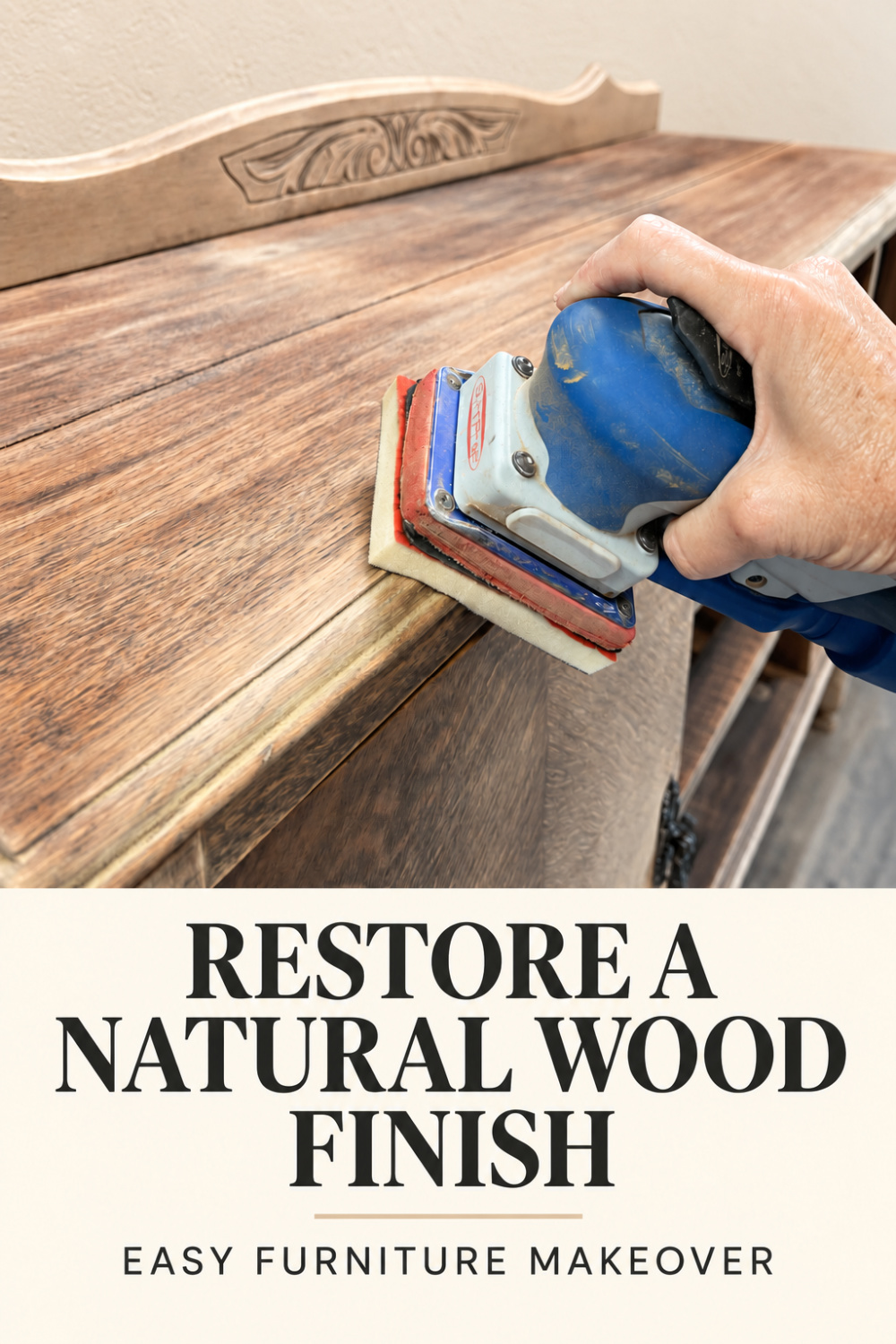
Water and furniture stripper can raise the wood grain, leaving the surface rough after it dries. Once the furniture is completely dry, lightly sand the wood until it feels smooth.
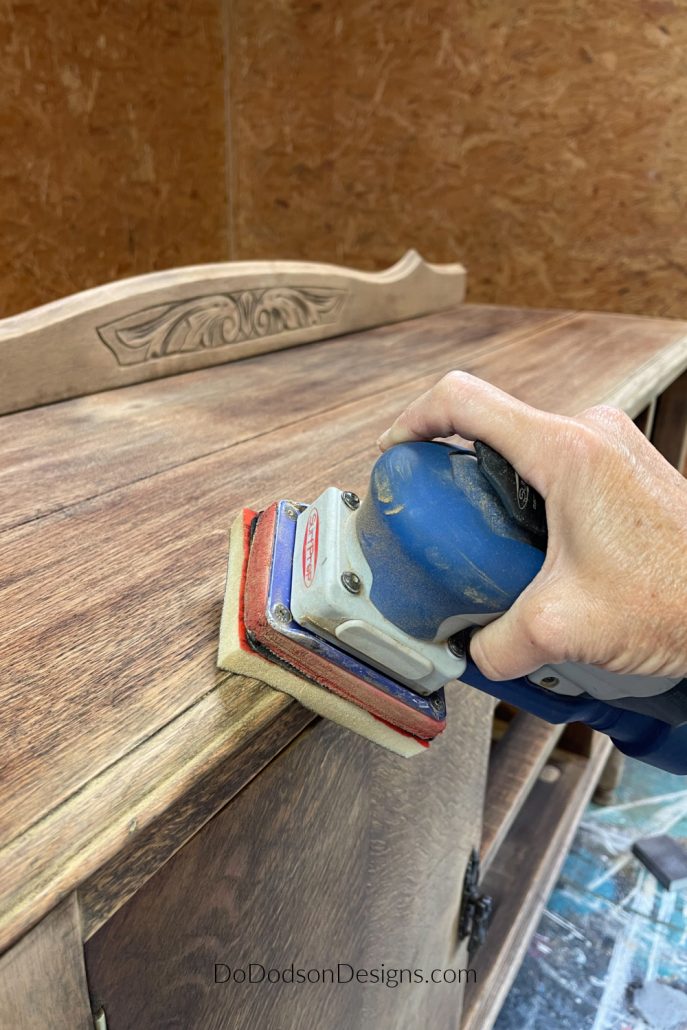
I used 220-grit sandpaper and an electric sander on the large, flat surfaces. Sand with the grain of the wood and keep the sander moving to avoid creating dips or uneven areas. Use a sanding sponge or folded sandpaper around carvings, edges, and detailed areas.
Veneer warning: Sand veneer gently by hand whenever possible. It can be surprisingly thin, and aggressive sanding may expose the material underneath.
Wear a dust mask and use dust collection when available. When you finish sanding, vacuum the surface thoroughly and wipe it with a clean, lint-free cloth. Avoid soaking the wood again because additional moisture can raise the grain.
Should You Seal a Natural Wood Finish?
Sealing natural wood is optional, but the right choice depends on where and how the furniture will be used. A dining table, bathroom vanity, or frequently used dresser needs more protection than a decorative piece in a low-traffic room.
I wanted to preserve the pale, freshly stripped appearance of this sideboard. Most sealers deepen the wood tone at least slightly, so I chose to leave mine unfinished. Because it sits in my bedroom and receives very little wear, that decision has worked well for me.
How to Seal Raw Wood Without Darkening It
No product is guaranteed to remain completely invisible on every type of wood. Before sealing the entire piece, test the product on the back, bottom, or another hidden area and allow it to dry completely.
Here are a few options to consider:
- Extra-matte water-based topcoat: Usually produces less ambering than an oil-based finish and provides good protection.
- Clear furniture wax: Adds light protection but may deepen the wood tone and require occasional reapplication.
- White furniture wax: Can help maintain a pale appearance while softening orange or pink undertones.
- Hard-wax oil: Provides a durable, natural-looking finish but usually enriches or darkens the wood.
If you love the unfinished look and the furniture will receive minimal use, you can leave it bare as I did. Just remember that unsealed wood is more vulnerable to moisture, stains, oils, and everyday grime.
My best advice: Test first. The same sealer can look completely different on oak, pine, walnut, mahogany, or wood veneer.
The Finished Natural Wood Furniture Makeover
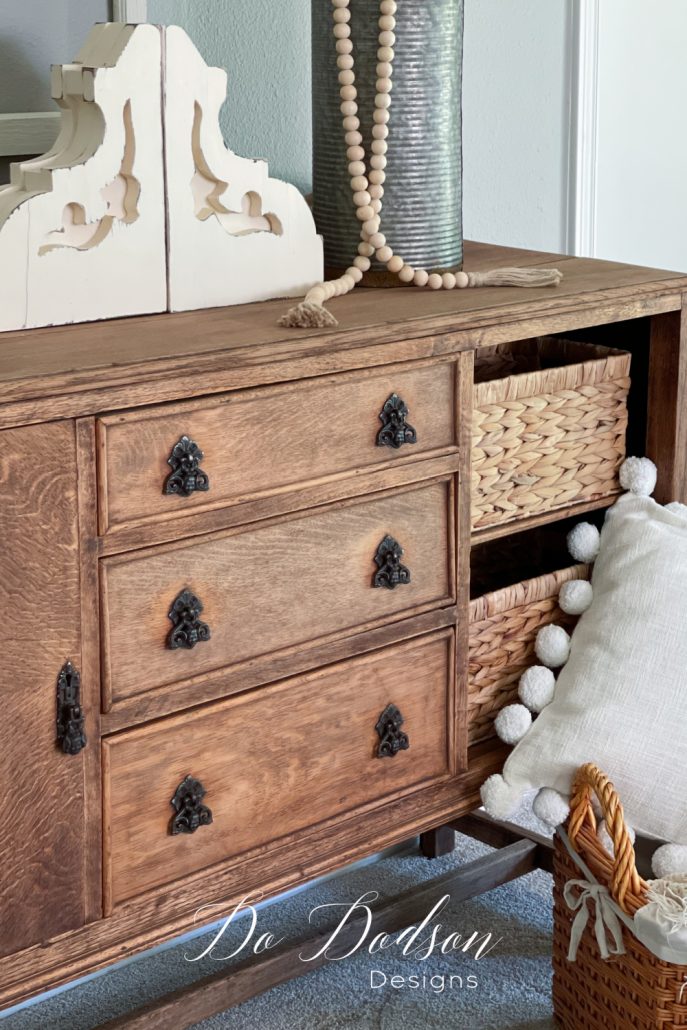
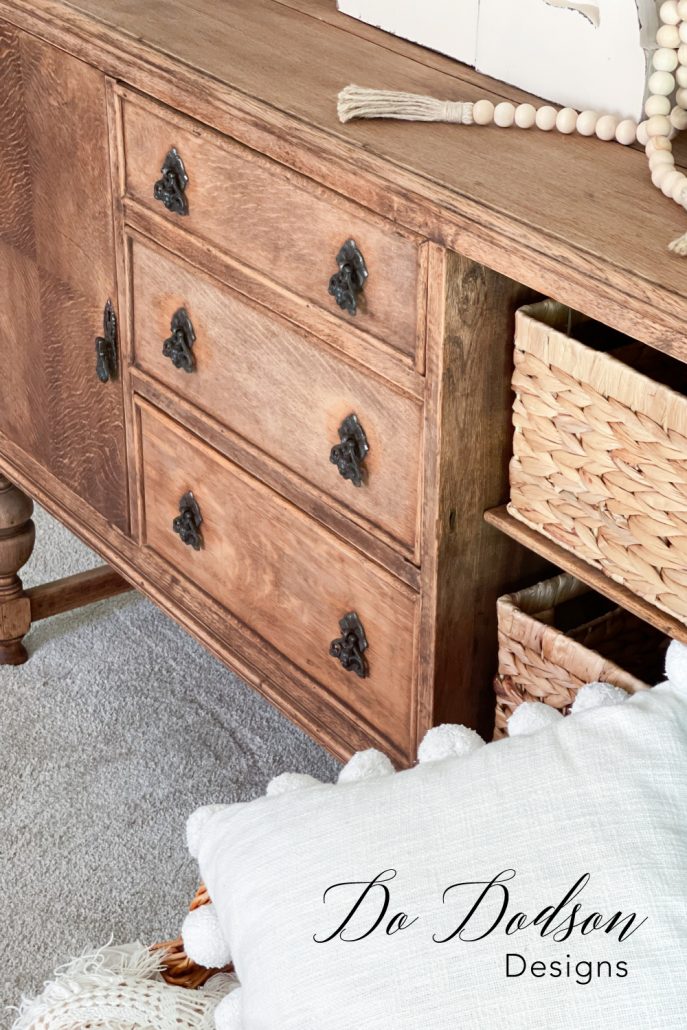
After the wood dried and I smoothed the raised grain by fine sanding, this once-dark sideboard had the light, natural wood finish I had imagined. The original wood grain and aged character are now the stars of the makeover—and I’m so glad I didn’t cover them with paint.
Would you rather watch the transformation? My step-by-step video tutorial shows how I removed the old varnish and created this natural wood finish from beginning to end.
Watch the Step-by-Step Video Tutorial 🎥
How Has the Unsealed Wood Held Up?
Several years later, the natural, unsealed wood still looks beautiful. Because the sideboard is in my bedroom and receives very little wear, I haven’t had problems with watermarks or stains. I would make a different choice for a tabletop, bathroom vanity, or other hardworking surface, but leaving this particular piece bare has worked well for me.
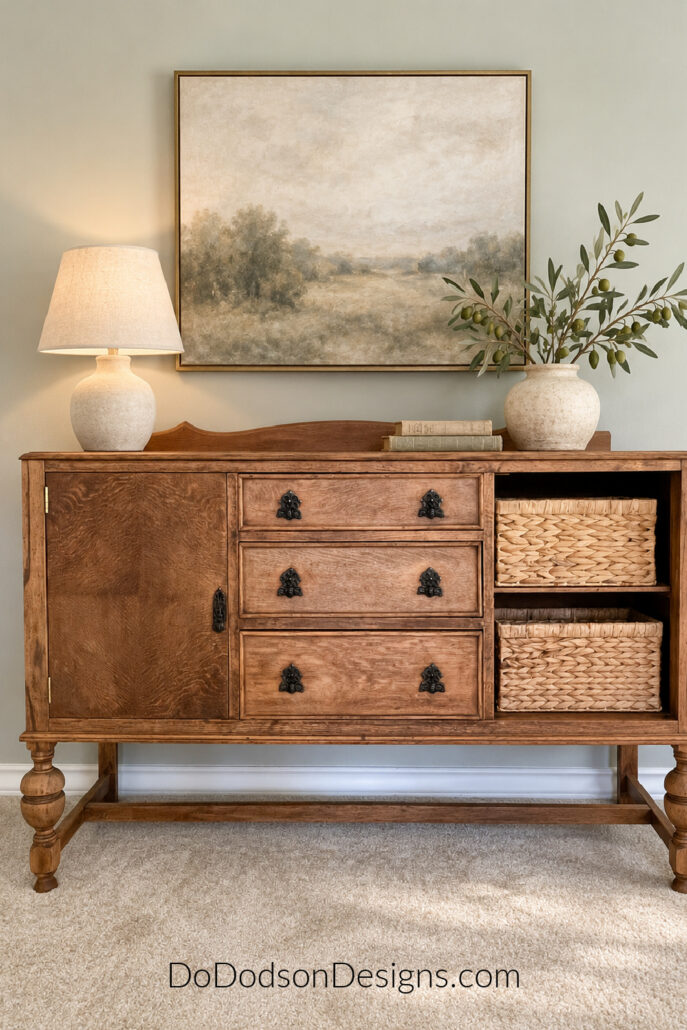
I’m pretty sure this old gal had never been given a bath before this makeover, but she came through it beautifully. Now she’s proudly showing a little naked wood—and honestly, she wears it well!
Would you leave the wood natural, or would you add a protective finish? I’d love to hear what you would choose. Leave me a comment or simply say hello. It always makes my day to hear from you.
Thanks for joining me for another furniture makeover.
Until the next project—xo, Do
More Furniture Refinishing Ideas You’ll Love
Ready to uncover the beauty hiding beneath another old finish? These furniture refinishing tutorials will help you strip, sand, and update your next secondhand find.



Wow! I love it just the way it is, and certainly wouldn’t risk putting a protective coat on it. In fact I’m very tempted to try this on a piece I have that is quite similar, but as we’re about to move house I think that particular project had better wait for a while. Thanks for sharing all your projects Do, I love seeing what you get up to.
Judi in the UK
Hi Judi! I totally understand about moving. That’s the reason this project took me so long to complete. You can always revisit later. Wishing you all the best in your move. Take care 🙂 xo
Looks very nice ,well done!
I started to do a mixture out off old white furniture and old natural wood items like little tables, chairs and sewing cases ect.
Greetings from a Dutch girl/woman living in Germany Veronika
Hello there Veronika! So good to hear from you. I think the mixture sounds dreamy! Enjoy your weekend. 🙂 xo
Gorgeous! Now I’ve got to try out that Greenez Stripper! I’ll use your link to get some!
Thanks for sharing Do! As always, you are an inspiration!
Abbey
Hi Abbey! I think you’ll love this new product. Easy to use, and it’s not smelly. Thank you as always for stopping by. Have a beautiful weekend, my friend. 🙂 xo
Absolutely beautiful!! Love it so much! I would leave it as is, no sealer…👍🏻.
Thanks, Lori! It’s perfect to me as is. Thanks for reading. Have a great weekend! 🙂 xo
As always you nailed it!! I love the look for a low traffic area! Well done! Next time go naked😂
LOL, I don’t think there will be a next time. Too hot for me. Thanks for reading. 🙂 xo
So awesome! Love that you left it as is. Personally, I’d likely want to add a flat topcoat. But I’d test it on an inconspicuous spot first to make sure I’m still happy with it first.
Hi Sara!
I did just that, and it darkened it slightly even after drying. So, for now, I’ll love it as is. Thanks for reading. 🙂 xo
I love how that turned out!
Thank you, Virginia! It’s always good to hear from you. 🙂 xo
Why not clear wax, soft patina and protection – should not change the color, a good rubbing to finish the application and give it that soft and natural appeal while preserving the raw wood look.
Hi JoAnne,
I have used clear wax on raw wood, which darkens the wood slightly and I agree that it does give a lot of protection. I prefer using white wax to keep the wood light, but even that can bring out the wood undertones and change the color. For now, I’ll just love it as is. Thanks for stopping by. It’s always good to hear from you. 🙂 xo
This is so pretty, my friend. Hugs to you.
Thank you, Renea. It’s always good to hear from you. Hope to see you next month. 🙂 xo
I love the look of raw wood! I prefer using hemp oil to seal— it soaks in to protect snd polymerizes for long lasting Protection. I did this to my bathroom cabinets a few years ago and I LOVE it!! Your piece is Beautiful!. I’ll give that stripper a try next time!
Yes, I love hemp oil too and have used it on many projects. Thanks for reading, and have a great weekend. 🙂 xo
She’s gorgeous! Well done!
Thank you, Angie! 🙂 x0
I love the raw wood. It is gorgeous. I have a piece from when I was 10 years old and I’m going to use this technique.
Do you like the Greenz better than the Citris type?
Thanks for sharing. I love seeing your work!
Hi Lori, I would have to say yes due to the long wet time with the GREENEZ. That’s an awesome idea. What a great story this will tell.
Love it! What about sanding sealer?
Hmmmm, I’ve never heard of sanding sealer. Can you share more?
Hey Donna! I’m glad you did this piece (and yes – you’re crazy for doing this in 100 degree temps! ). But thank you anyway.
I have a furniture piece similar to this sideboard, that I rescued from the curb; but your piece clearly has better looking hardware.
I’m saving this for our bathroom rennovation, so mine MUST be sealed somehow. What about a wax sealer? A nice dull, flat finish, showing off beautiful wood?
Hi Diana, This would make a gorgeous vanity for a bathroom. You’re correct. It will need to be sealed in a wet area for sure. Wax works well, but you’ll still have a slight color difference in the wood. White wax works well and keeps the wood light and bright.
How about using a wood conditioner after?
Of course, that’s always an option, but it will cause a color change in the wood.
Hi Donna!! I have been wondering about this brand of stripper. Now I know. How do you think it compares to Citrix srip? I don’t know,.I would probably deal it with clear wax or hemp oil. Just so it doesn’t dry out.
Hi Cheryl! The difference I saw was that it had a long wet time which is excellent!
I love the ‘naked’ look and would leave as-is. Wood is a lot more durable than we give it credit for IMO! 🙂 I have to check if we have GreenEZ here in Toronto. Looking forward to trying it! Enjoy your weekend my friend. XOXO
You got that right, Denise! Wood is durable. Enjoy your week. 🙂 xo
Yep, it looks puryt good! Pretty color, too!
Thank you, Linda! 🙂
I would leave it natural. Love the look!! Think i will do this to an old dresser in my bedroom and haven’t been sure what to do ,and now i know. Thank for your inspiration!!
You’re welcome, Patricia! 🙂 xo
Thanks for this Do – I just had a custom piece dropped off and she wants it in natural wood and then white waxed. I’ll give this stripper a try on the old varnish finish. I just bought it through your link and pinned this post! Your piece looks amazing!
Hey Cindy! Let me know how it turns out. Thanks for stopping by. 🙂 xo
It’s beautiful just as it is.
One question. I’m assuming there might have been a door on the side where there now are baskets, which I love. So if there was a door there that was removed and you stay with raw wood do you fill the holes where the hardware was or leave the holes.
Thanks for the info on the stripper product.
Hi Joanne! It depends on the piece. The holes in this cabinet door were very small, so I opted not to fill them. But I would consider filling them if they were more significant and visible. Thanks for stopping by. 🙂 xo
Hi Do! This piece is a stunner! I would love to have a naked wood cabinet in my bedroom. Maybe one of these days, I will find one to strip it like you did here. Just love it!
I’ve wanted to try this for a while now, and I’m so glad I did. Thanks for stopping by. See you soon!
Do
It turned out beautiful. You have been my inspiration for many pieces. When you rinsed it off was there a mess. I only have my driveway And there are plants and grass where the water will run off
Hi Amy! Thank you. There was no residual left on the wood. However, I can’t say whether it is safe or not to use it on your driveway. I did it on the grass using 5-gallon buckets under each leg to protect it from the dirt. So far, the grass hasn’t been affected by the runoff. I removed as much of the varnish remover as possible before rinsing and scrubbing it with water. I hope this helps.
Best wishes. 🙂 xo
Hi Do. I love natural wood too and thought I’d pass on a wax that doesn’t change the color of that beautiful pale wood. It’s by Trewax…Clear Paste Wax. I hear it up in the microwave just enough to soften, as it’s really hard right out of the can. It goes on easily and soaks into the wood to protect it. The finish stays as it was before waxing. LOVE!!
Hey, thanks for sharing this paste wax, Susan! I’ve used Minwax paste with good results too. I’ll for sure give this a try. 🙂 xo
Thanks for the update on this gorgeous piece, Do! It’s absolutely stunning. PINNED! XOXO
1. I love your work
2. As suggested by others, I wonder if a wax finish would enhance it further
3. I note you were unable to remove the hardware which probably illustrates why it is important to do so whenever possible for ease of working. The slight ‘irregularities’ round the hardware areas draw my eye immediately.
4. I’m someone who, sadly, has yet to start on her own project!
Good eye, Audrey.
Yes, I was unable to remove the hardware without damaging it. In order to keep it in its original state I opted to go around them. The stripper was gentle enough that they still look good. Old, but good. At some point I may try to add a sealer but for now, it’s holding up beautifully. Oh and by the way, the pictures for some reason made it look a bit orange and it’s not at all. Photography can be tricky catching what the eye sees. Thanks for your observations. 🙂
I realize this is an older post so I hope you can still respond. I am wondering what type of dust collection system you use. I am revamping my 1 C garage/workshop and am very confused about the many choices. Any advice would be greatly appreciated!
Hi Janet!
Yes, I’m always happy to help. I purchased mine from Home Depot. The brand is Rigid. It’s portable so easy to carry around. I’ve used the same vac for over 15 years now. I did have to purchase an adapter to for my sander. I also got it from Home Depot. It’s been so helpful. When we remodeled our home, it was a game changer for sanding inside our home. Wood cabinets and wood work.