
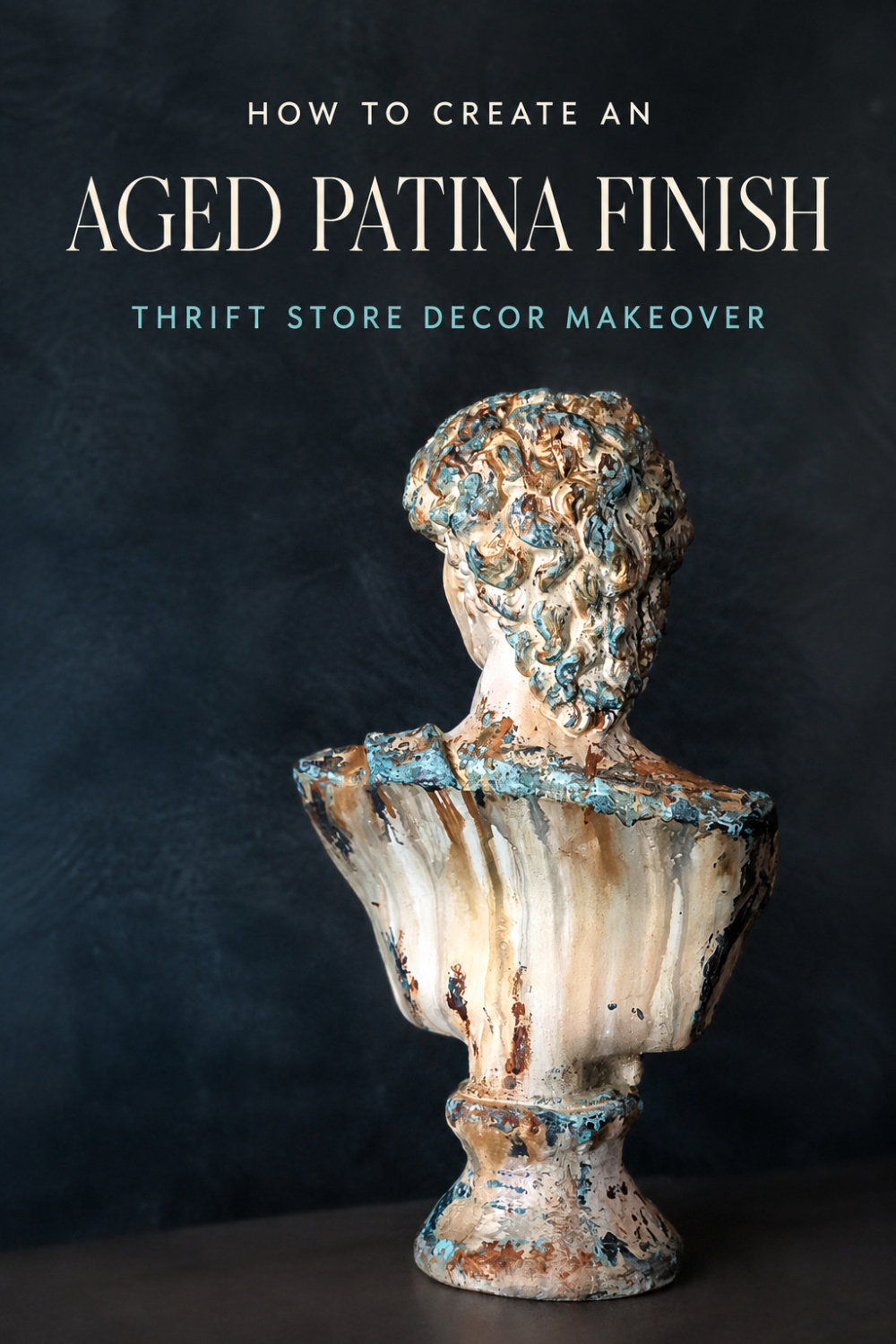
Want to make an ordinary thrift store find look as though it has been beautifully aging for decades? In this tutorial, I’ll show you how to create an aged patina finish using layered paint, reactive patina products, and metallic gold highlights. This easy technique gave my thrifted plaster bust a wonderfully weathered, Old World appearance—and you can use the same process on many decorative objects and furniture pieces.
September 2026: This post has been updated with clearer instructions and helpful tips for creating an aged patina finish on thrift-store decor.
This post contains a few affiliate links to help you find the products I use. You are not charged extra to use any of the links, but any income I make will be used for more fun projects! To see my full disclaimer, click here.
What Is an Aged Patina Finish?
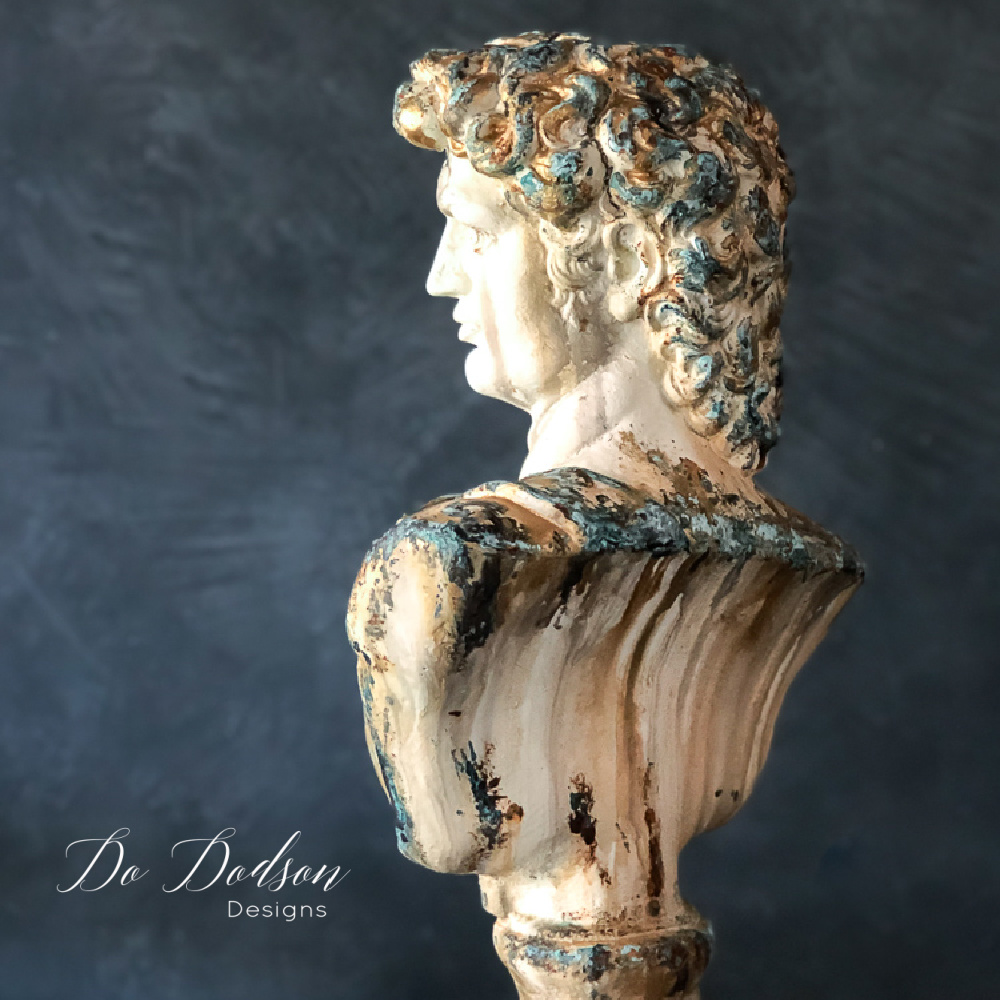
An aged patina finish recreates the color, texture, and character that naturally develop on an object over time. For this project, I used reactive patina paint and activator spray to create authentic-looking rust, bronze, and blue-green oxidation. Unlike ordinary layered paint, these products contain metal particles that react with the spray, so every finish develops a little differently.
The wonderfully unpredictable results are part of the fun. You can use this technique to give plaster busts, decorative objects, planters, and even painted furniture a beautifully weathered, Old World
look.
Finding the Perfect Thrift Store Decor for an Aged Patina Finish
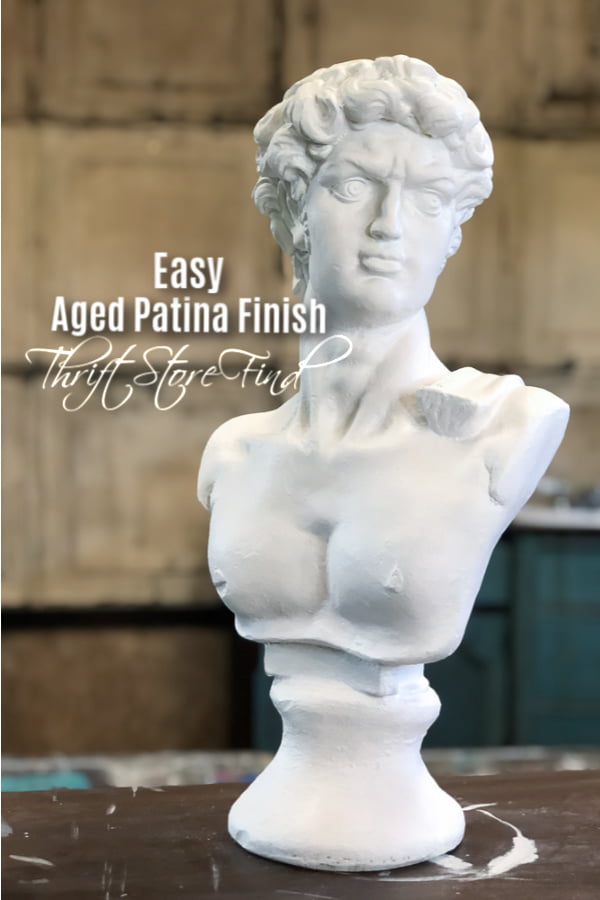
When I spotted a bust of Michelangelo’s David at the thrift store, I swooped down on him like an eagle after its prey. I may have even clutched him a little too tightly while watching for anyone who might try to beat me to the checkout. Ha!
While everyone else was probably wondering what I planned to do with him, I could already picture David covered in a beautifully aged patina finish. His raised details and plaster surface made him the perfect candidate for layers of weathered color—and for me, it was love at first sight.
Supplies for Creating an Aged Patina Finish
Gather your supplies before beginning so you can apply the painted and reactive layers while they are still workable. The exact colors can be changed to complement your project, but you will need compatible reactive patina paint and activator spray to create the oxidized finish.
- Bonding Phttps://dixiebellepaint.com/products/buttercream-chalk-paint?rfsn=9223321.a04534rimer, if needed for a slick or
- Paint Brush
- Butter Cream (basecoat)
- Gravel Road (drippy first layer)
- Putty Knife
- Fine Spray Mist Bottle filled with water
- Bronze Patina Paint
- Iron Patina Paint
- Green Patina Spray
- Blue Patina Spray
- Metallic Paint (Gold Digger)
- Shop Towels or clean lint-free cloths
Before painting, clean the thrifted piece thoroughly to remove dust, dirt, and oily residue. Because my bust was made of porous plaster, it didn’t require a bonding primer. If you’re working on glass, tile, laminate, or another slick surface, apply a suitable bonding primer first and follow the manufacturer’s drying instructions.
Once the surface is clean and prepared, apply one even coat of cream-colored chalk mineral paint. I used Buttercream for my base coat and allowed it to dry overnight before adding the decorative layers.
Step 1: Create the Drippy Paint Layer
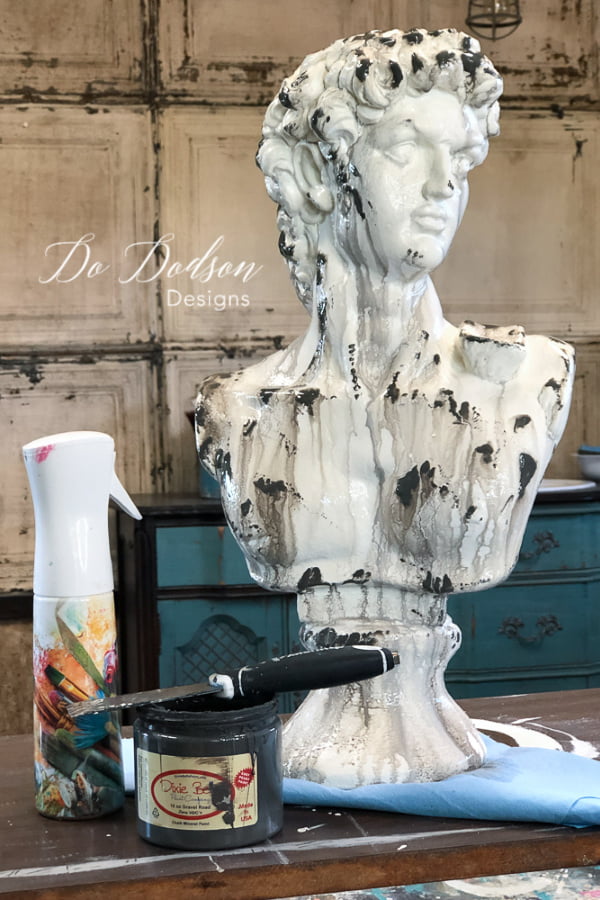
Once the base coat is completely dry, use a putty knife to scrape a small amount of contrasting paint across the raised areas of your project. I used a dark gray paint over the cream-colored base to create depth beneath the aged patina finish. Work lightly and apply the color unevenly—the random placement will make the finished piece look more naturally weathered.
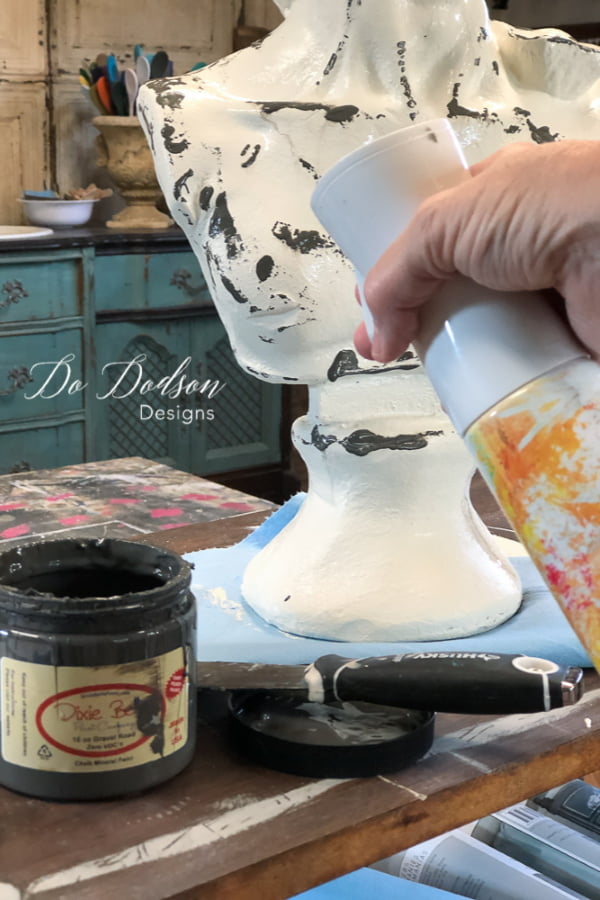
While the contrasting paint is still wet, mist it with short bursts of water to encourage the color to run. Tilt the piece slightly or allow the water to travel naturally down the surface. Keep shop towels nearby because this step can get messy, and blot away any drips that become too heavy. I avoided adding dark paint around David’s face because some details are simply too handsome to hide. 🙂
Allow this layer to dry thoroughly before applying the reactive patina products.
Step 2: Apply the Reactive Patina Paint
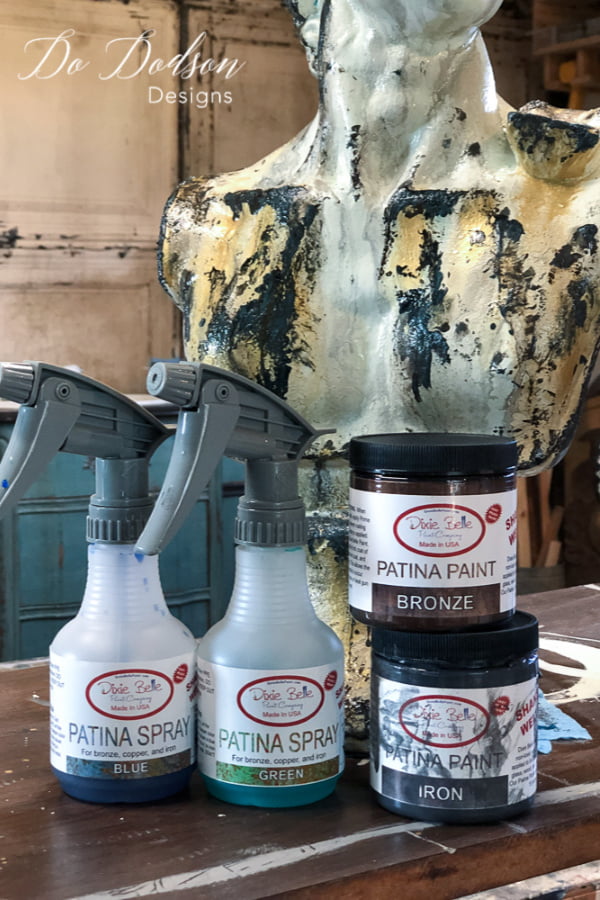
Here’s where the transformation really begins. Stir the reactive patina paint thoroughly, as metal particles can settle to the bottom of the container. Using the putty knife, apply small amounts of patina paint to the raised areas where natural aging and oxidation would be most visible.
Avoid covering the entire surface evenly. Starting with a light, irregular application creates a more authentic weathered appearance and gives you greater control over the finished look. You can always add another layer if you want more color and texture.
Step 3: Spray the Patina Activator
While the final layer of reactive patina paint is still wet, spray the compatible patina activator directly over the painted areas. Apply enough spray to wet the patina paint without completely flooding the surface.
Then step away and allow the chemical reaction to do the work. The finish will gradually change as the real metal particles begin to oxidize, creating natural variations in color and texture. Resist the urge to keep adjusting it too soon—you can always apply more patina paint and activator after the first layer develops.
Patina Paint and Activator Color Combinations
The color of the oxidized finish will depend on which reactive patina paint and activator you pair together:
- Iron patina paint + green activator: Creates a naturally rusted iron appearance with warm brown and orange tones.
- Bronze patina paint + blue activator: Produces a blue-green weathered bronze finish.
- Copper patina paint + green activator: Develops shades of green, turquoise, and blue similar to aged copper.
I layered multiple combinations on David to create extra color, variation, and age. If you enjoy a perfectly predictable finish, this technique may test your nerves. But if you’re a risk-taker like me, those unexpected little changes are what make the project so much fun.
Always use compatible patina products and follow the manufacturer’s current instructions.
Try a mixture of all three and see what happens. For some of you… it’s a no-go. But for those risk-takers like me, we are all about the unknown and embrace the unexpected. I call them happy surprises.
Step 4: Allow the Patina Finish to Develop
Now comes the hardest part: waiting. Depending on the patina paint, activator, temperature, and humidity, the oxidized finish may take several hours to fully develop. The iron-and-rust combination generally takes longer to reach its final color.
Spray it, walk away, and let the reaction time do its work before deciding whether it needs another layer. Mine took approximately four to six hours to develop. Once the surface has dried, you can evaluate the color and repeat the application if you want a stronger or more layered aged effect.
Step 5: Add Metallic Gold Highlights
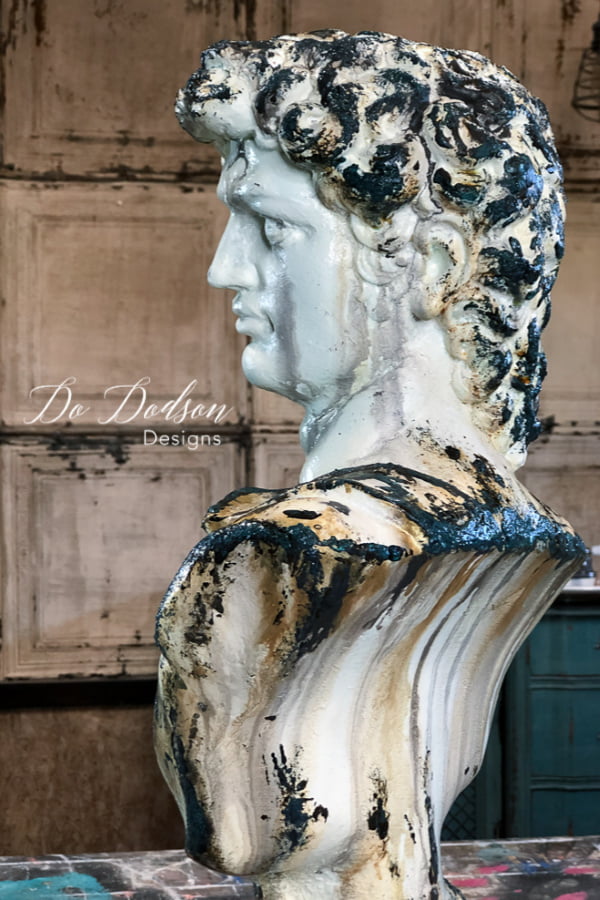
Once the patina finish is completely dry, add small amounts of metallic gold paint to highlight the raised details. I applied the gold with a putty knife, concentrating on areas that would naturally catch the light.
For a softer, drippy effect, lightly mist the metallic paint with water while it is still wet, then allow it to run down the surface. Work slowly and step back often—a little metallic gold goes a long way. This final layer brought all the rust, bronze, and blue-green tones together and gave David the perfect touch of Old World elegance.
The Finished Aged Patina Thrift Store Makeover
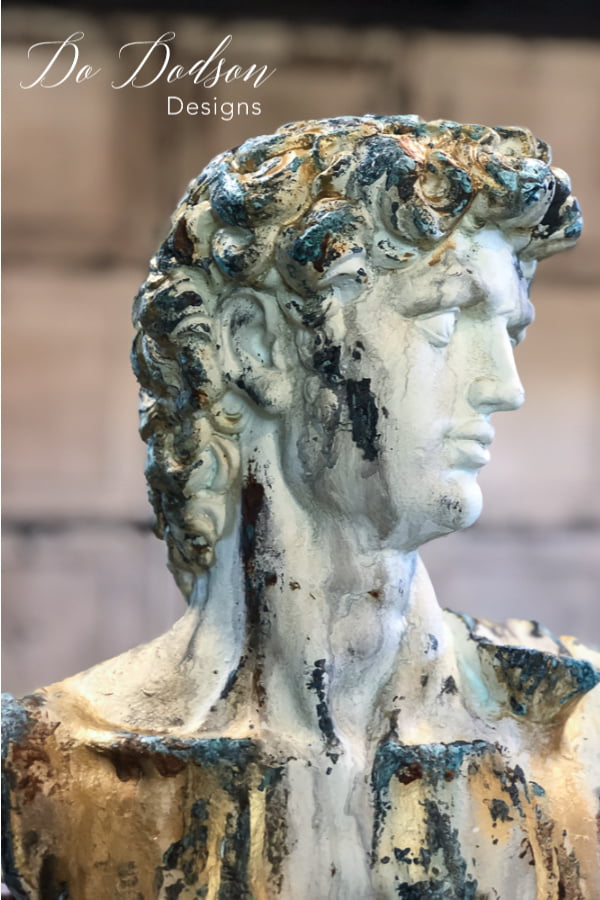
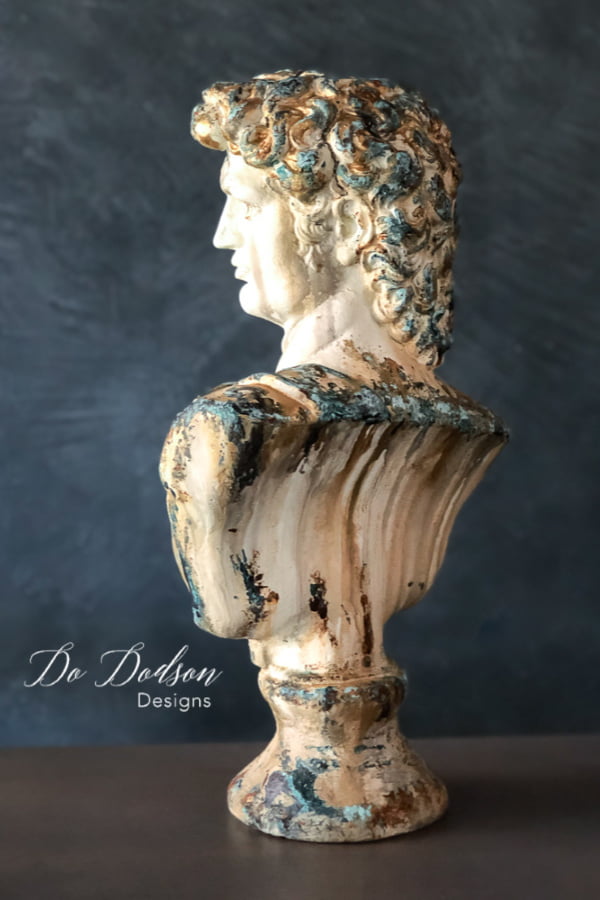
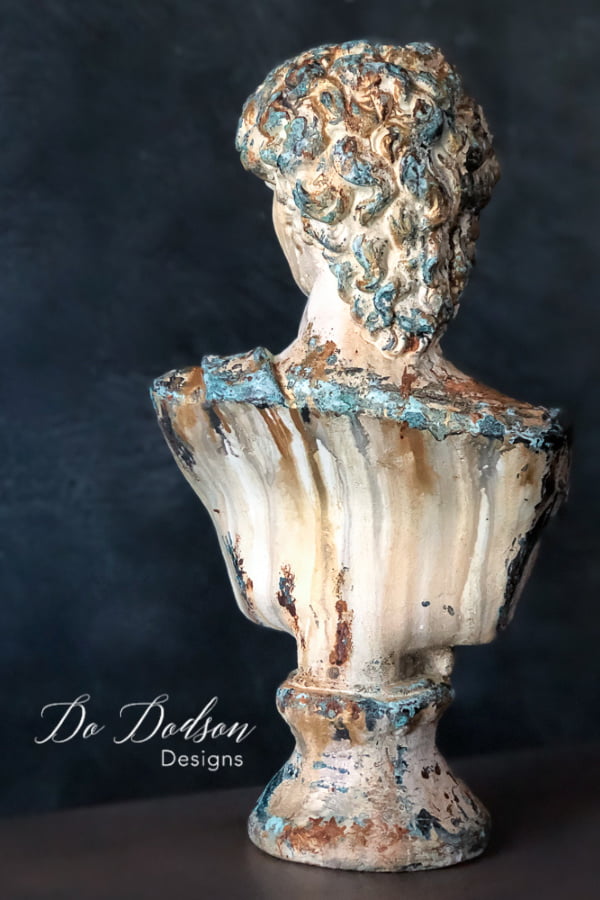
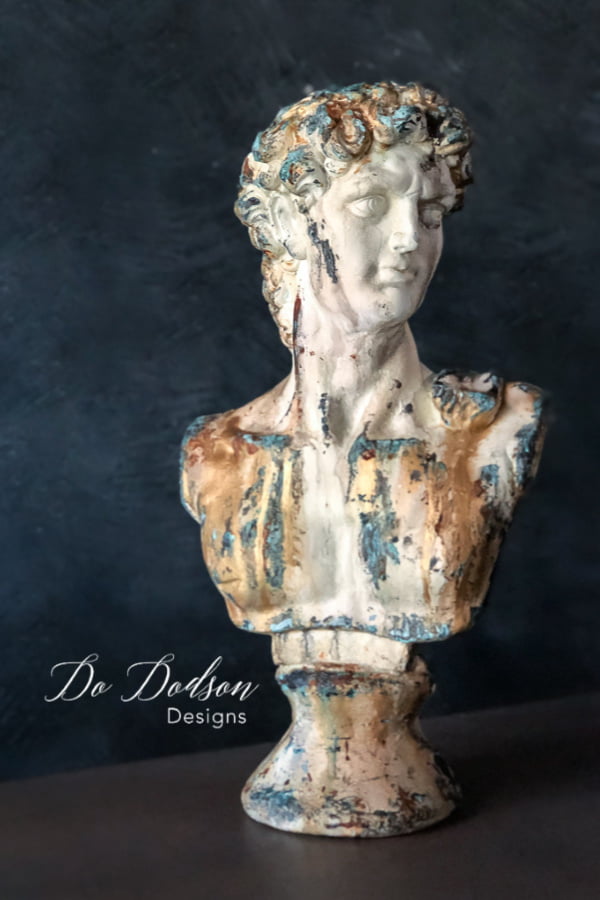
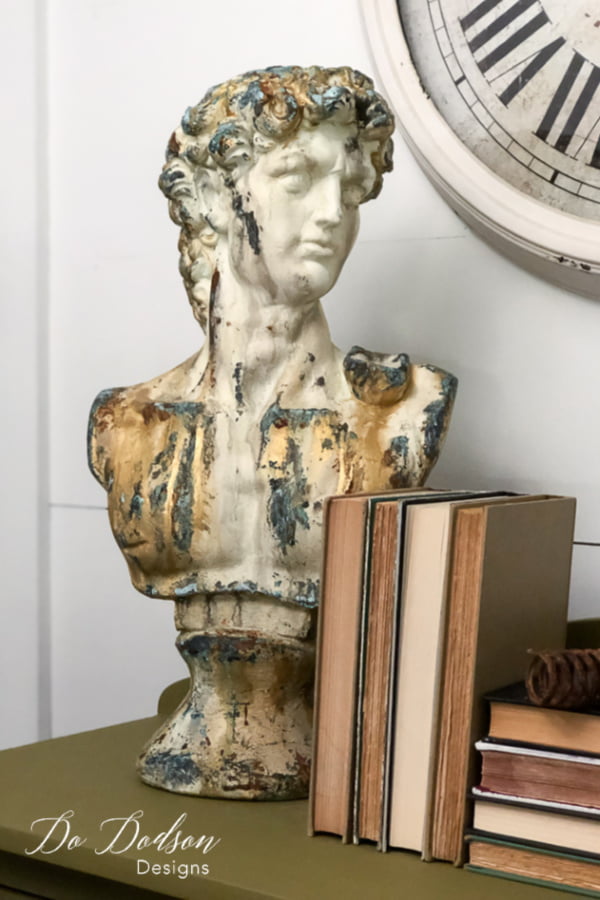
David has come a long way from the plain plaster bust I carried out of the thrift store. The layered rust, bronze, blue-green patina, and metallic gold settled beautifully into the raised details, giving him the appearance of a treasured piece that has been aging for generations.
I especially love how the cream-colored base still peeks through in places. That contrast keeps the finish from becoming too dark and helps every weathered layer stand out.
Tips for a Natural-Looking Aged Patina Finish
- Apply each color unevenly. Random placement looks more authentic than completely covering the surface.
- Concentrate on raised details. These areas naturally catch light, moisture, and wear, making them ideal places for patina and metallic highlights.
- Start with a small amount. You can always add another layer, but removing too much reactive patina can be difficult.
- Allow the reaction to develop. The colors will continue changing for several hours, so don’t judge the finish immediately after spraying it.
- Use contrasting colors. Allowing some of the light base coat to remain visible gives the darker patina layers more depth.
- Practice on a small area first. If possible, test your color combination on the back, bottom, or another hidden area before covering the entire piece.
Create Your Own Aged Patina Finish
This thrift store makeover is proof that an ordinary decorative object can become something truly special with a few layers of paint and a willingness to embrace the unexpected. The reactive patina created the wonderfully aged character, while the metallic gold highlighted David’s details and gave the finish an elegant final touch.
Would you try this aged patina finish on thrift store decor or painted furniture? I’d love to hear what you would transform. Leave me a comment below and tell me about your next patina project.
If you enjoyed this technique, take a look at my rust patina finish on a secondhand chest and this easy upcycled home decor project for more creative makeover inspiration.
Until the next project—xo, Do
More Patina and Thrift Store Makeover Ideas
If you enjoyed transforming this thrift store find, here are a few more painted finishes and creative makeovers to try next.

Very cool. I had an idea of doing something similar to a coffee table, but didn’t know about patina paint. I think I’ll try it now that I’ve seen the David. I’ve also enjoyed your other furniture posts. I’ve got a round table that is crying out for some love.
Hi Fran,
Here’s a coffee table I did with this paint. Good luck!
https://dododsondesigns.com/man-cave-furniture/
xo, Do
I just ran up on this post while I was looking at your furniture makeovers. Thank you for posting it. I have a chipped plaster bust I’ve held onto for about 15 years because I love it, but I can’t display it because the chips make it unacceptable. NOW I know what to do. I’ll refinish it per your example and the chips won’t matter. The bust is of the founder of the company I used to work for. They threw it out because it was damaged and I salvaged it. I no longer work there, but I think of the company very fondly none-the-less, and the founder was a very great man.
I just wanted to say Thank you.
Awe, I love this so much. Something this personal should be saved. I’m so glad I could help. 🙂
HI. This looks great. Did you apply the slick stick first, and if so, just with a brush? Thanks.
Hi Robin,
For this project I did not use slick stick. I listed it for those that may want to paint on slick surfaces such as glass or anything shiny. This bust was made from plaster so I just painted it with my base color and then added the patina. I hope this helps. Have fun creating! 🙂 xo