
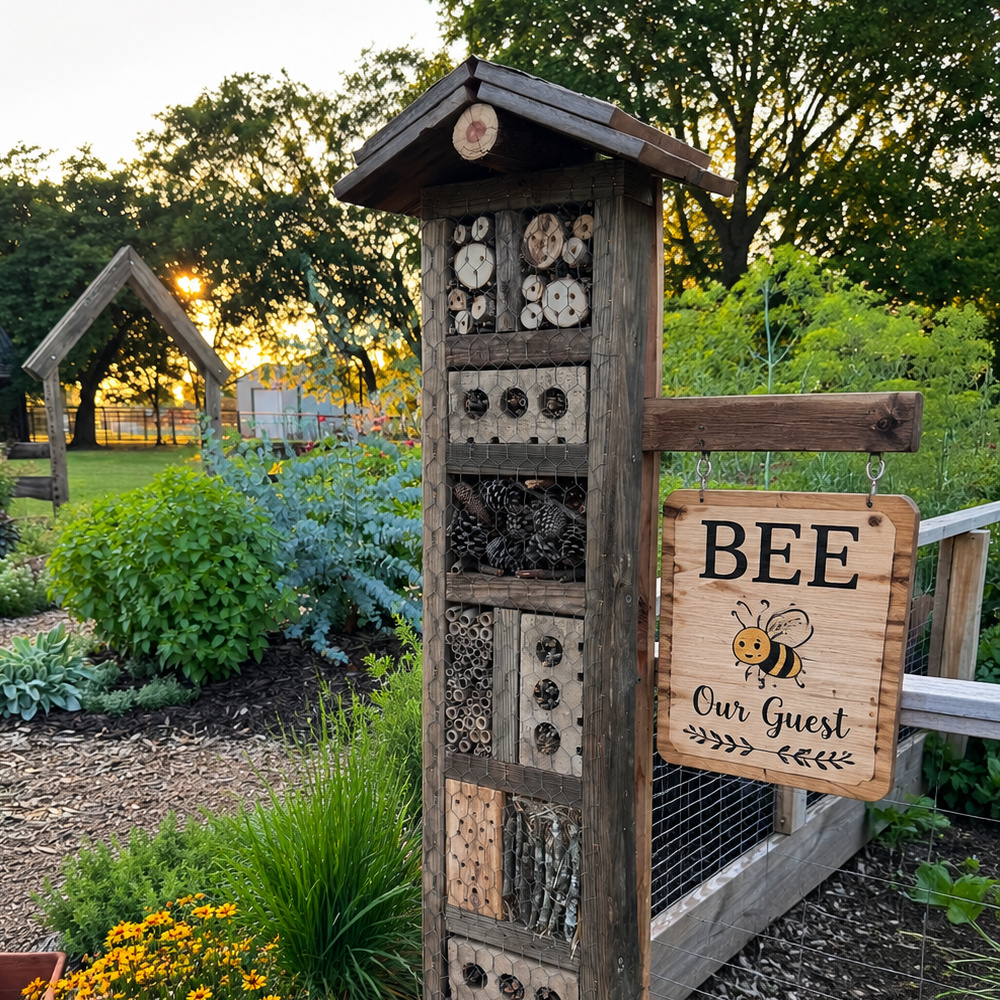

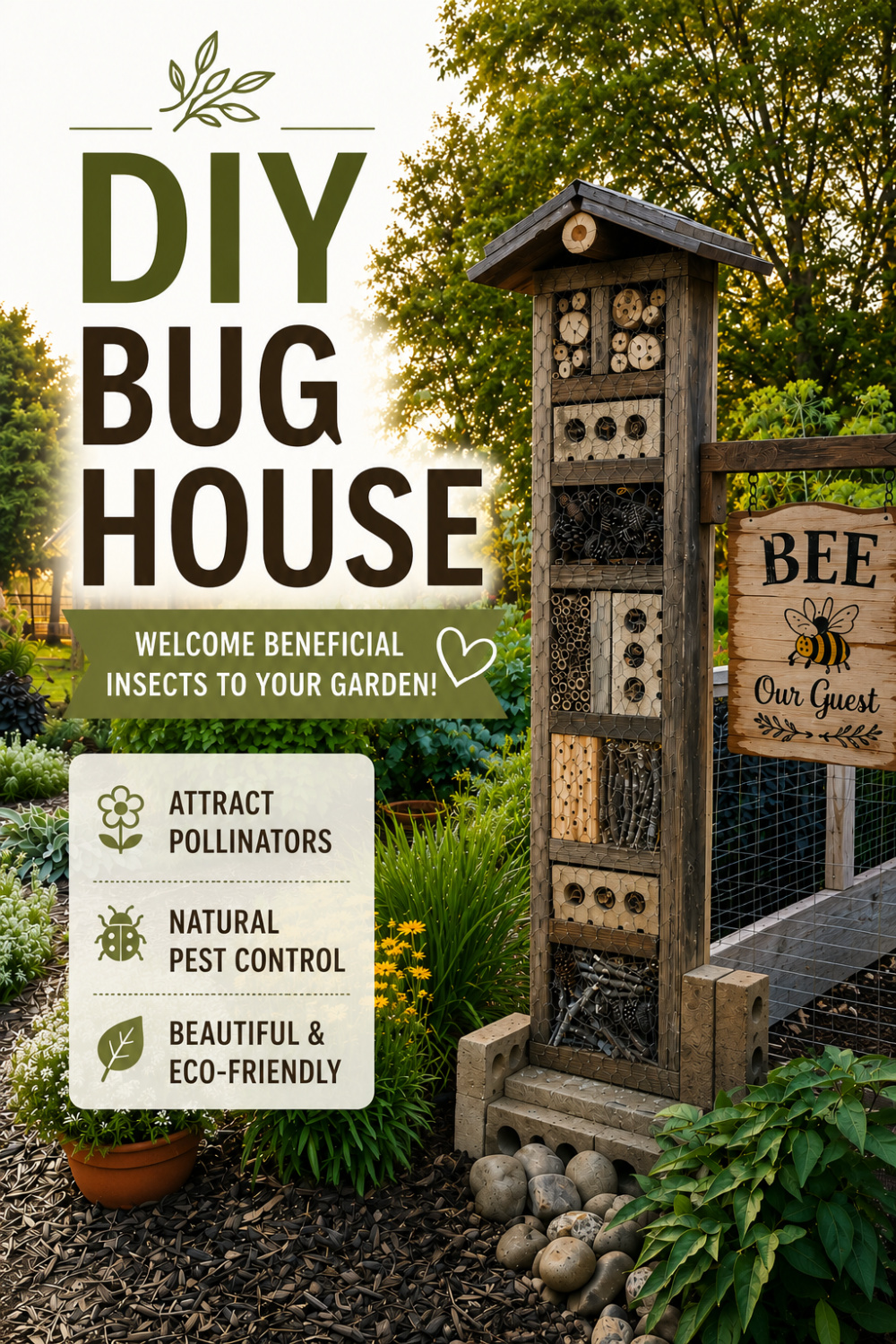
If you’ve ever wanted to give beneficial insects a safe place to rest, nest, and overwinter, this DIY bug house is a fun weekend project that adds charm and purpose to your garden. Not only does it create a beautiful focal point, but it also provides a welcoming habitat for pollinators and other helpful insects that support a healthy garden ecosystem.
This finished bug hotel in the garden stands tall among flowers, herbs, and vegetables, offering a variety of natural materials that appeal to different species. Think of it as a cozy hotel for insects—a place where solitary bees, ladybugs, beetles, lacewings, and other beneficial bugs can call home.
* As an Amazon Associate, I earn from qualifying purchases and through other companies as well. You will not be charged extra when you purchase through these affiliate links, but any income I make helps me create more amazing DIY projects to share with you! To see my full disclaimer, click here!
Why Build a Bug House?
Creating a DIY insect hotel is one of the easiest ways to encourage biodiversity in your garden. Many beneficial insects need protected spaces for nesting, predator protection, and overwintering.
A natural garden insect shelter can help:
- Support native pollinators
- Encourage beneficial insects
- Improve pollination in vegetable gardens
- Reduce the need for chemical pest control
- Add rustic charm to garden spaces
Plus, it’s a fantastic way to repurpose scrap wood, branches, pinecones, and other natural materials.
SUPPLY LIST:
Ready to build your own DIY bug house? Here’s everything I used to create this little retreat for my garden visitors.
- Scrap lumber 2X4s (untreated is best)
- Deck screws (exterior wood screws)
- Concrete bricks with holes
- Bamboo or hollow stems
- Small branches and twigs
- Pinecones
- Small wood logs
- Straw or dried grasses
- Chicken wire and wire cutters
- Staple gun
- Circular saw, or miter saw
Step 1: Building the Main Frame of the Bug House
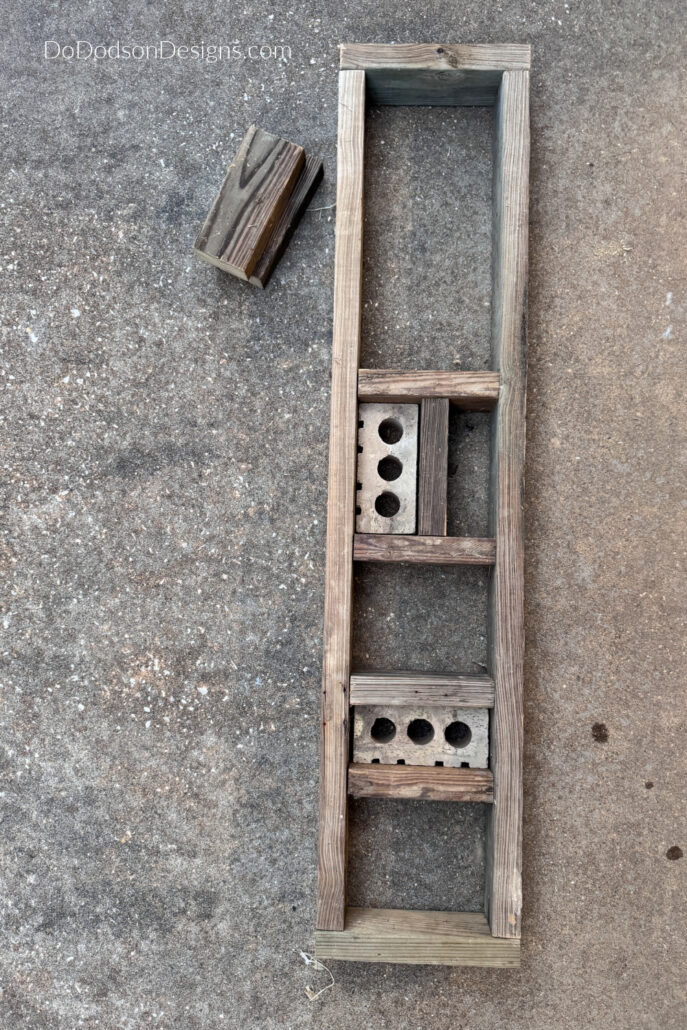
Begin by creating a tall rectangular frame from weathered 2X4 lumber. This one measures four feet tall by 2 feet wide. The bricks I chose for this project are sized to fit into the frame. It’s what I had on hand, so I built around them.
I wanted a simple, narrow, vertical design that could fit beside and be supported by my vegetable garden fence while still providing plenty of room for various nesting materials.

Step 2: Secure the Frame Together
Using exterior wood screws and a drill, assemble the frame securely. Always pre-drill holes in dry, weathered wood to prevent it from cracking or splitting.
This project doesn’t require perfect lumber. In fact, reclaimed and weathered boards add extra character to this bug hotel. Using salvaged wood not only gives the project a rustic, timeworn look, but it also helps recycle materials that might otherwise go to waste. The imperfections, knots, and natural weathering add charm, making each bug house completely unique and one of a kind.

Step 3: Create Interior Compartments
Add horizontal and vertical dividers throughout the frame to create separate sections.
These compartments allow you to include different materials that attract different types of beneficial insects to your garden, as you’ll see when I start filling them up.
Step 4: Add the Back Panel
Lay the frame flat and attach boards to the back.
The back helps contain all of the nesting materials while adding strength to the structure.
These boards can also be removed when you need to refresh nesting materials from year to year.

Step 5: Gather Natural Nesting Materials for the Bug House
One of my favorite parts of building this DIY garden project was gathering all the materials from around our property.
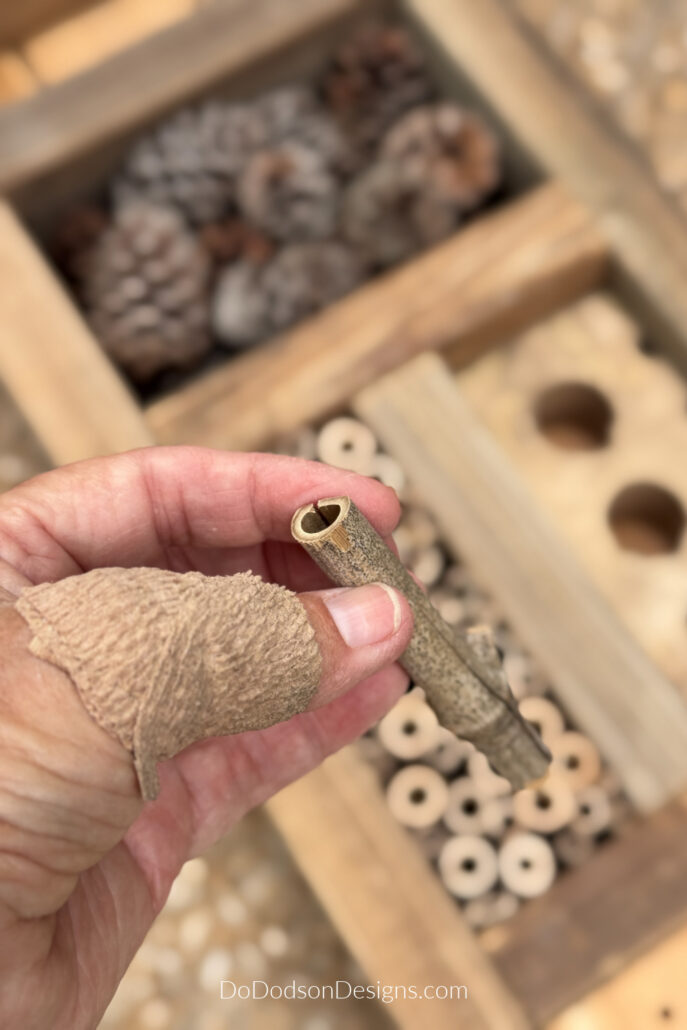
Great Fillers For A Bug House Include:
- Bamboo stems (from the neighbors 🙃)
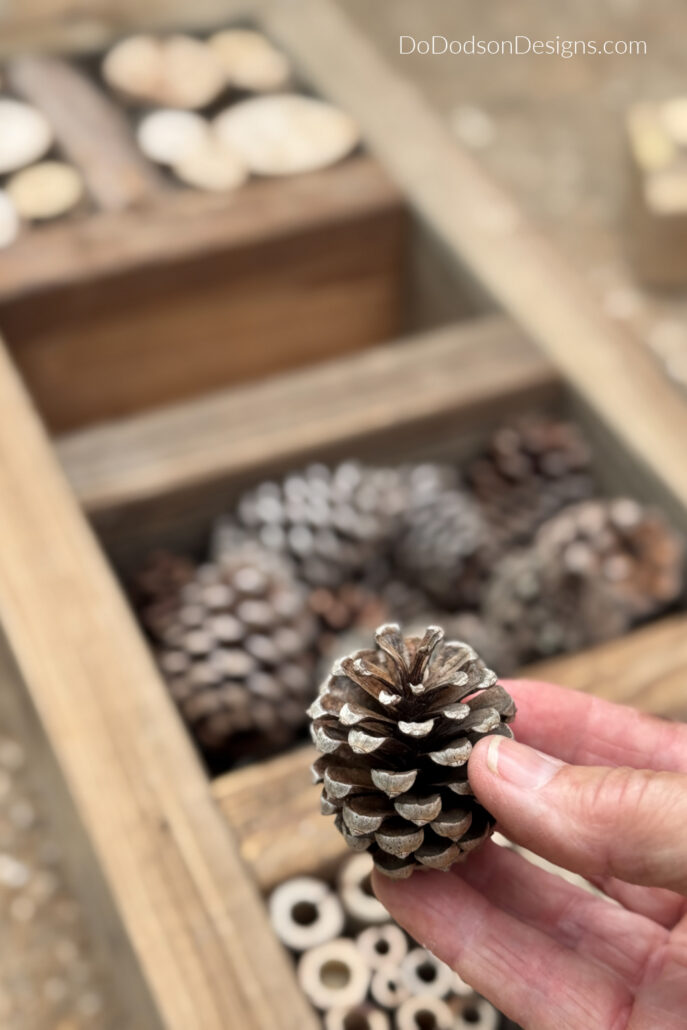
- Pinecones
- Twigs and sticks
- Small logs
- Straw
- Bark
Different insects like different sizes and spaces, so including a variety of materials and hole sizes will help attract more beneficial bugs to your bug house.

Step 6: Drill Nesting Holes
Use a drill and different-sized bits to create holes in the wood and or small logs. Insects love these tiny spaces! I want to think they get all cozy together. Just a bunch of bugs hanging out having a party!🐞🪲🐝 🎉
Tip: Drill the holes several inches deep into the wood, but avoid drilling all the way through. They will need protection from the outside environment when it gets cold, and doing this will keep them safe and snuggly.

Step 7: Fill Each Compartment
Start arranging your collected materials into the individual sections.
I mixed:
- Bamboo tubes
- Straw
- Pinecones
- Drilled wood blocks
- Lichen-covered sticks
- Natural branches
The variety creates a more inviting Rustic Garden Bee Shelter.
Step 8: Cover with Chicken Wire
Once everything is tightly packed in place, cover the front with chicken wire and trim it to fit using wire cutters.
The wire helps keep materials secure while still allowing insects easy access to their nesting spaces.

Step 9: Build a Roof over the Bug House
To protect the interior from rain, add a simple peaked roof.
An overhanging roof is important because it keeps the nesting materials drier and extends the life of your Bug House.

Step 10: Place Your Bug Hotel in the Garden
Choose a sunny location near flowers, herbs, and vegetables.
For best results:
- Mount or place it securely.
- Position it in a sunny location facing south to southeast.
- Keep it near pollinator-friendly plants.
- Avoid heavily shaded or wet areas.
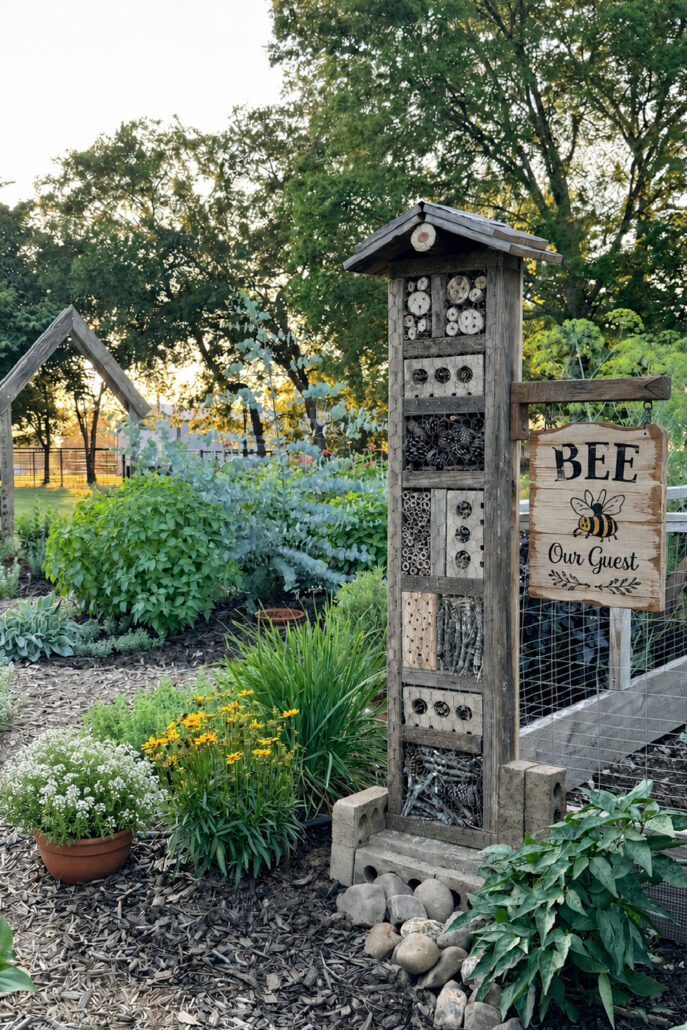
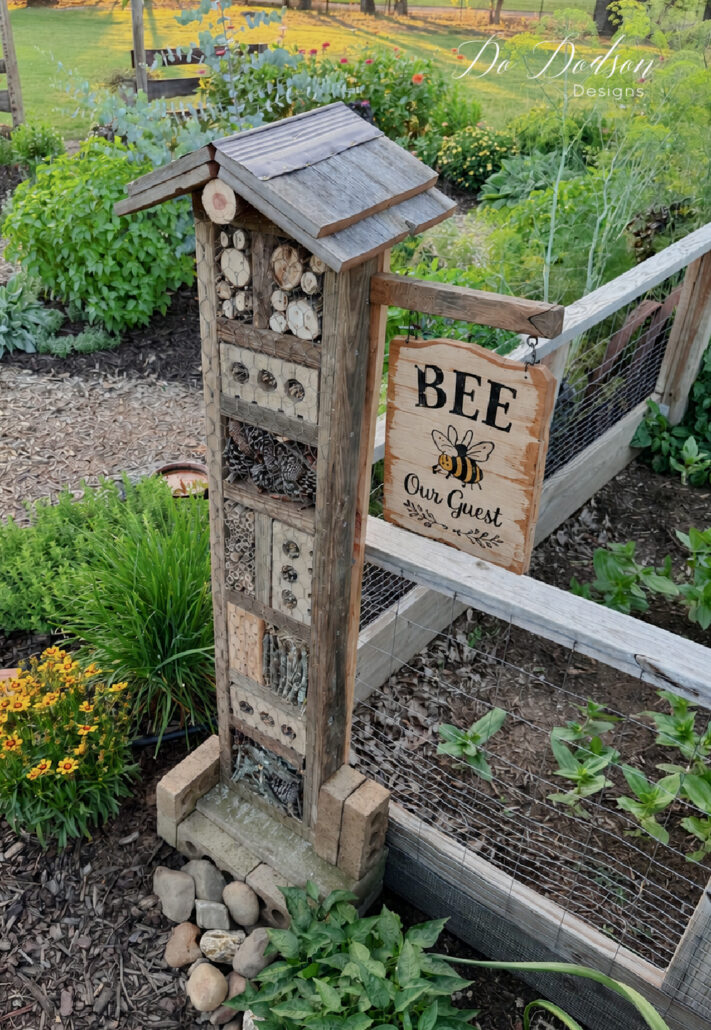
My completed Bug Hotel in the Garden now sits beside the vegetable beds where pollinators are active throughout the growing season.
What Insects Might Move In?
A well-designed DIY insect hotel may attract:
Mason bees: The hollow stems and drilled wood make perfect little nurseries for solitary bees like mason and leafcutter bees. They lay their eggs inside and create separate rooms using mud or leaf pieces, giving each baby bee a safe place to grow.
Lacewings: They love cozy hiding spots made from dried leaves, straw, and also love rolled cardboard. These gentle garden helpers may look delicate, but they’re hard workers when it comes to pest control. Both lacewings and their larvae feast on aphids, helping keep your plants healthy without the need for chemicals.
Ladybugs: These sweet little loves enjoy tucking themselves into the cozy spaces found in pine cones and corrugated cardboard. These sheltered spots provide a safe place to rest and overwinter, and once spring arrives, they’ll get right to work helping your garden by feeding on aphids and other common plant pests.
Beetles: They appreciate natural hiding spots made from bark, twigs, and pieces of dead wood. These hardworking garden helpers spend their time hunting unwanted pests, including slugs and slug eggs, helping protect your plants naturally while keeping your garden ecosystem in balance.
Green lacewings: These insects are attracted to cozy materials like dried leaves, straw, and rolled cardboard. While they may look delicate, they’re some of the hardest-working helpers in the garden. Much like ladybugs, lacewings love snacking on aphids, helping keep your plants healthy and thriving naturally.
These amazing garden helpers play an important role in pollination and natural pest control.
Tips for Success
- Use untreated wood whenever possible.
- Keep nesting materials dry.
- Replace worn materials every few years or as needed.
- Leave occupied nesting tubes undisturbed.
- Plant nectar-rich flowers nearby.
The more diverse your garden, the more attractive your natural garden insect shelter becomes.
More DIY Creative Scrap Wood Garden Inspirations!
If you’re enjoying all the buzz and blooms happening in my garden, be sure to check out the projects below! From simple DIY garden ideas to pollinator-friendly projects and cottage garden inspiration, you’ll find plenty of creative ways to make your outdoor space even more beautiful and welcoming.
Final Thoughts
I can’t tell you the last time I had a project this fun! It kept me grinning the whole time, thinking about the bug parties.
This DIY Bug House: Bee Our Guest! A Cozy Pollinator Hotel for the Garden was one of those projects that combined creativity, recycling, and gardening into one rewarding build. Not only does it add rustic charm to the landscape, but it also provides a valuable habitat for those beneficial insects that will help my entire garden thrive.
And because every Bug House needs a sign, I created these cute signs with the help of AI, and I have to say, I’m torn between them. Here’s the first one. BEE Our Guest. 🐝

The second one… OPEN for BEES-ness! 🐝 I’m leaning towards this one. 🥇
I also like AIR BEE & BEE! That cracked me up. 😆
Which one do you like best? Or if you have some other catchy bug house name ideas, I’d love to hear them! Drop them in the comment section below, please.

Whether you call it a bug house, DIY insect hotel, rustic outdoor insect shelter, or simply a hotel for insects, it’s a beautiful reminder that even the smallest garden visitors deserve a place to stay.
Have you ever built a bug house or pollinator hotel? I’d love to hear about it! Drop me your thoughts below or just say hi so that I know you stopped by for a bees-it! Visit… that was a stretch. This project is still makes me smile. 😊
Happy gardening, and thank you for stopping by to visit our little “Bee Our Guest” garden retreat in The Garden We Share.
Until the next project… xo, Do