
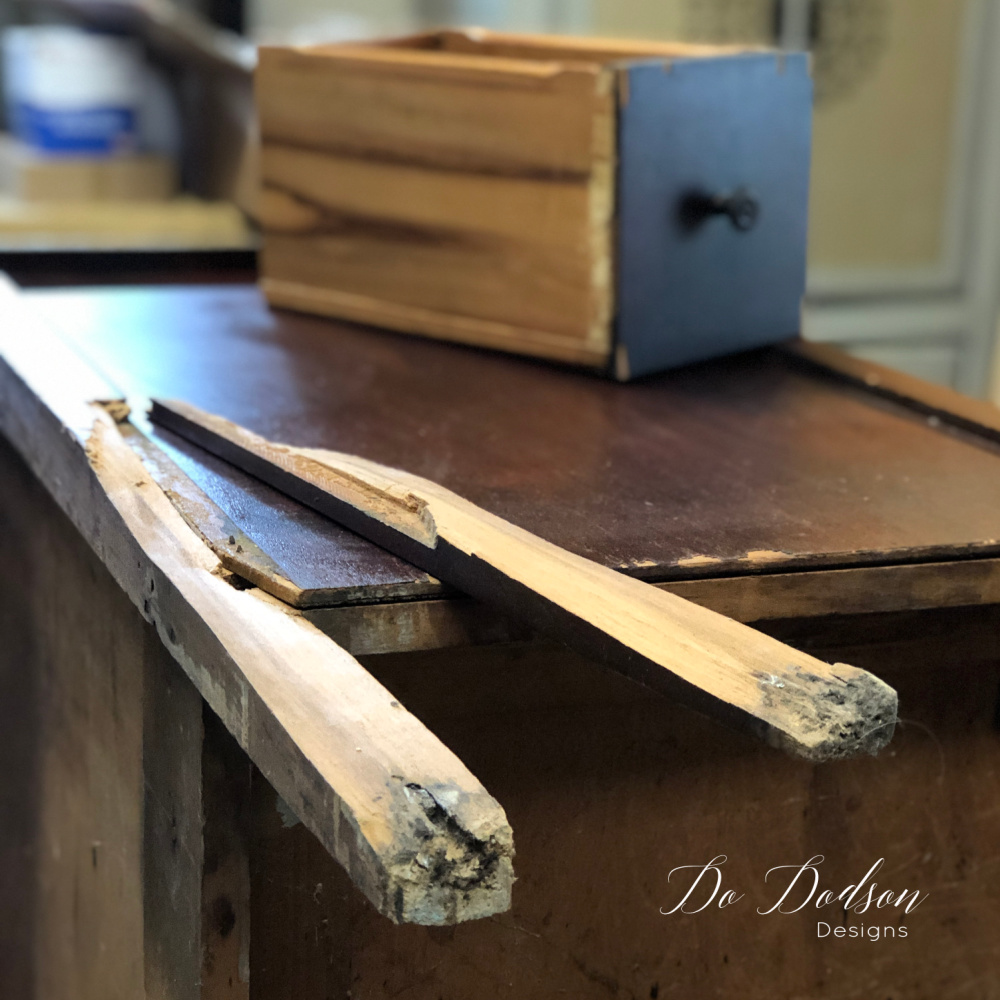

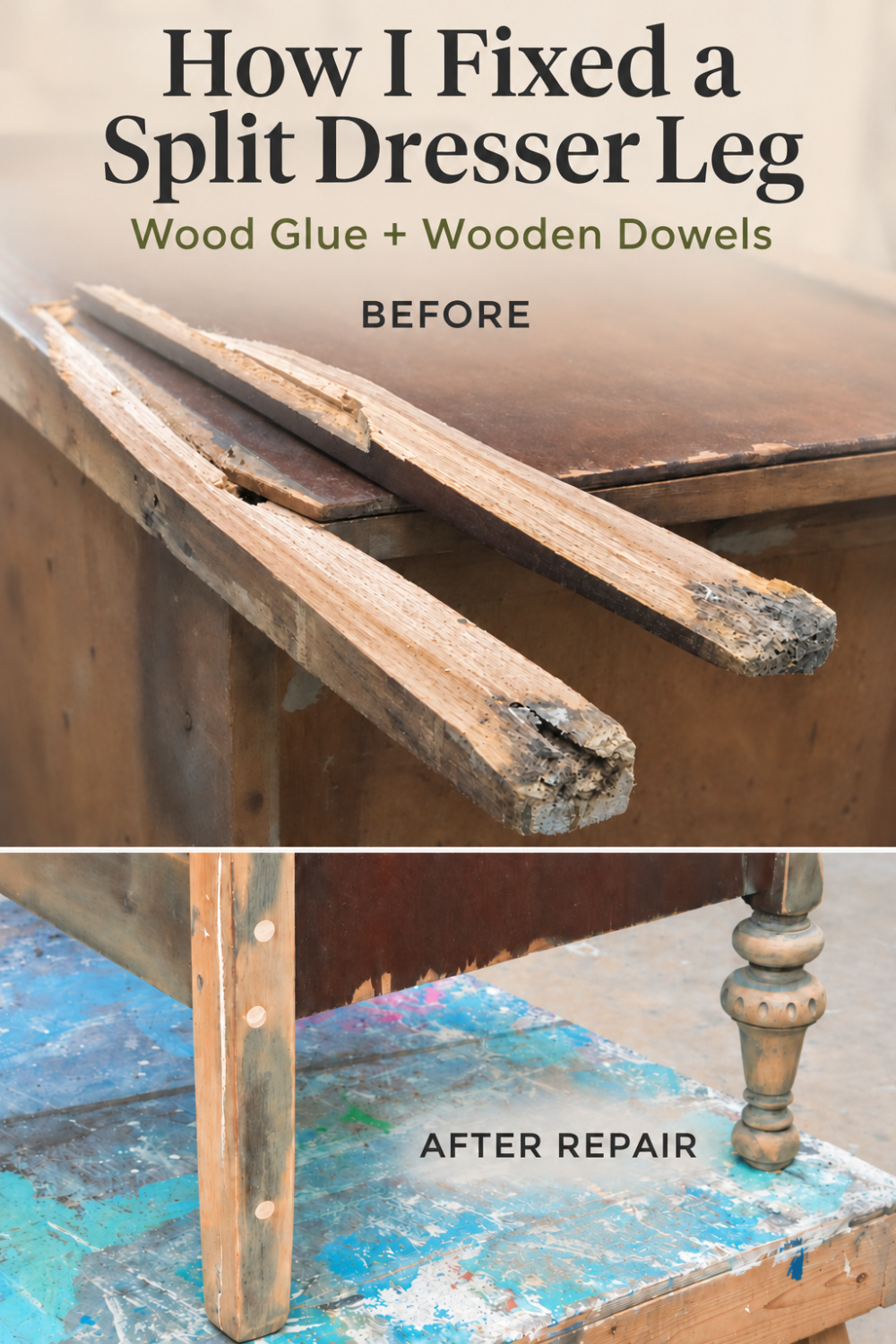
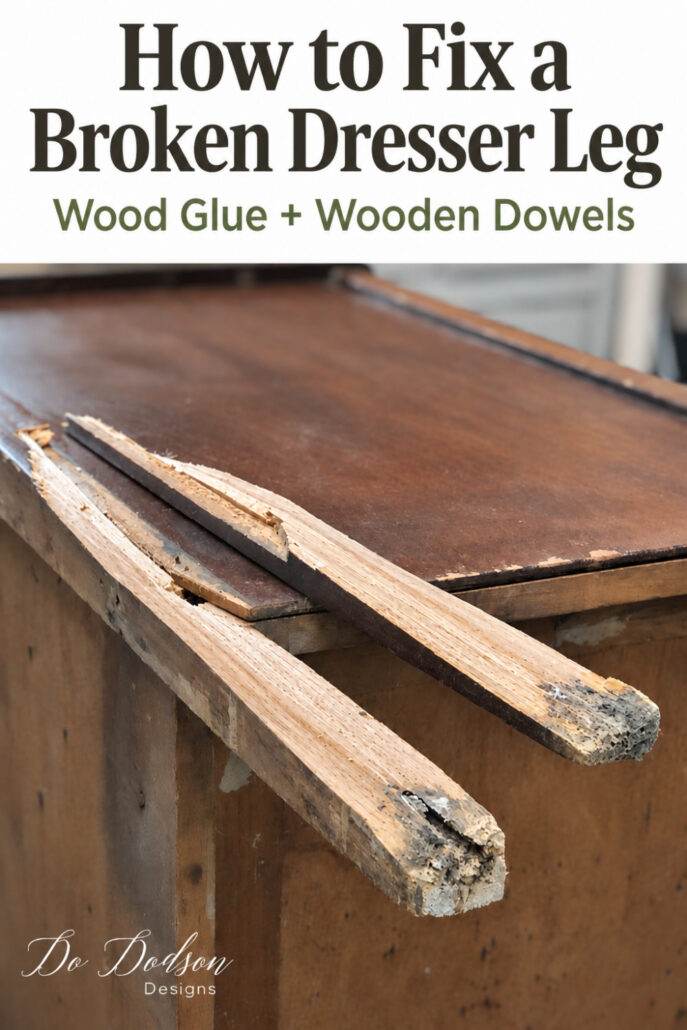
I have a soft spot for janky furniture. This dresser had good bones, except for the one I had to put back together. Ha! One of the wooden legs had split, so before I could get to the fun part (paint!), I had to fix it. I’ll show you how I glued and clamped the broken pieces back together, then reinforced the repair with three wooden dowels. If a broken leg is the only thing keeping you from bringing home a bargain dresser, this one might make you look twice.
Updated November 2026: I’ve updated this post to make it easier to follow how I glued the split dresser leg back together and reinforced it with three wooden dowels.
This post contains a few affiliate links to help you find the products I use. You are not charged extra to use any of the links, but any income I make will be used for more fun projects! To see my full disclaimer, click here.
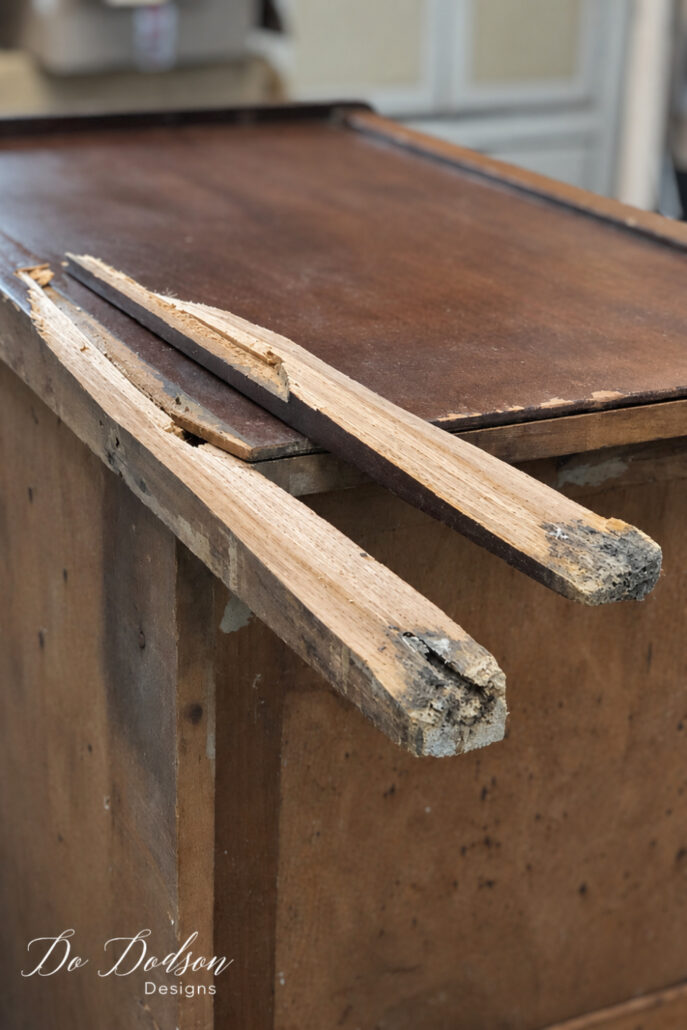
What the Split Dresser Leg Looked Like Before Repair
Tools and Supplies for the Dresser Leg Repair
Glue and Clamp the Broken Dresser Leg.
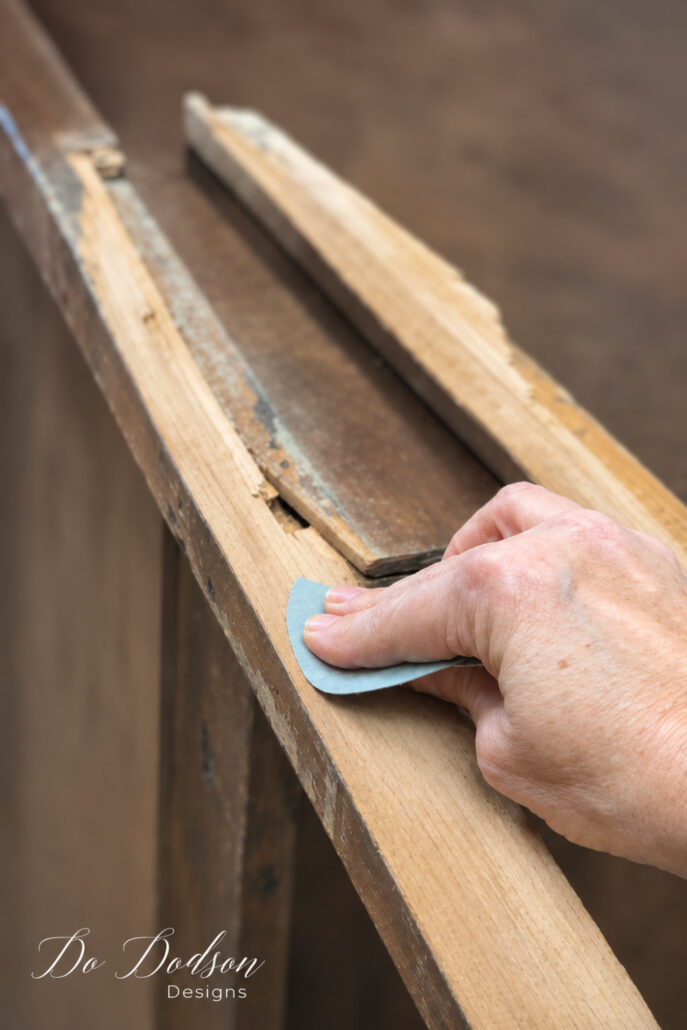
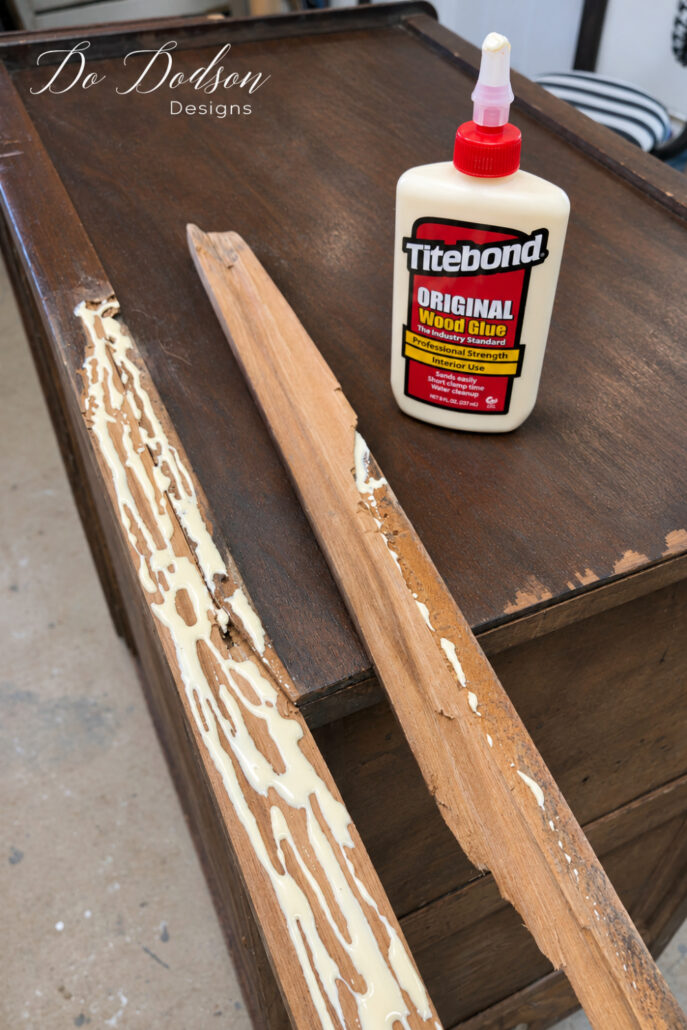
This dresser leg had split lengthwise. I called it a stress fracture. Every now and then my medical lingo sneaks into a furniture makeover! Before I reached for the wood glue, I lightly sanded the broken surfaces with 220-grit sandpaper to remove dirt and loose debris, then brushed away the sanding dust.
I spread wood glue over the broken surfaces, lined up the two pieces, and pressed them together. Then I wiped away the glue that squeezed out with a damp cloth.
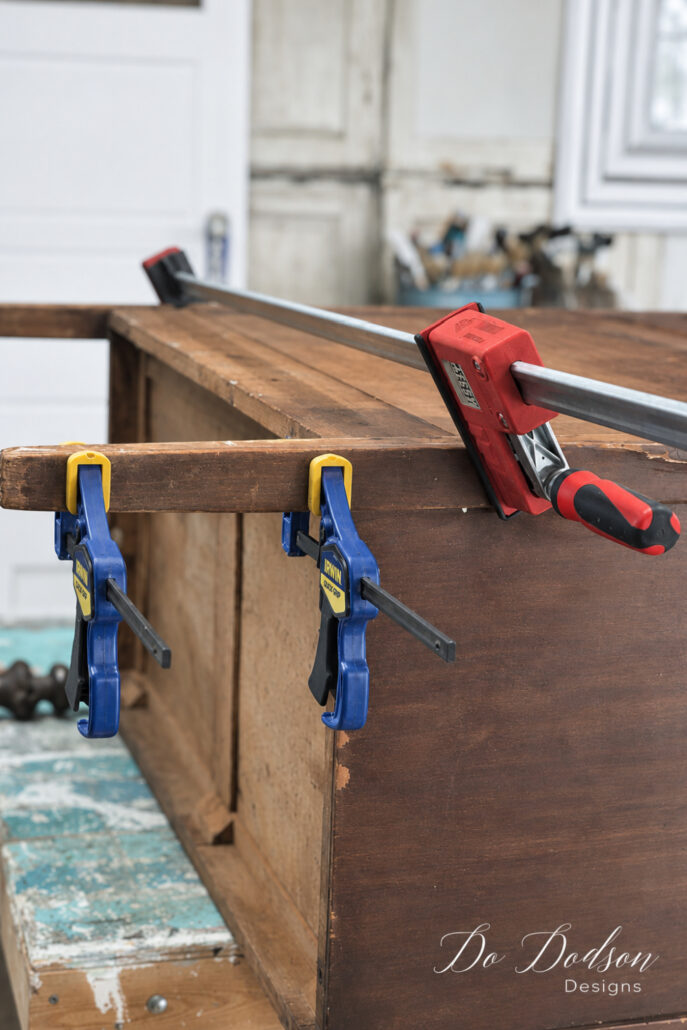
The split ran so far up the leg that my shorter clamps had nowhere to grab. My 50-inch parallel clamp could reach across the dresser and hold the broken piece in place while the glue dried.
I clamped the two pieces together to keep them lined up while the wood glue dried. Once I took the clamp off, the leg was back in one piece. Yay!
Reinforce the Dresser Leg With Wooden Dowels
To give the repaired leg extra strength, I used my drill and dowel kit to make three holes across the glued split. I cleared the sawdust out of each hole so the wooden dowels could fit snugly and seat fully.
Before tapping (using a hammer) each dowel into place, I put a small dab of wood filler on the tip that went into the hole.
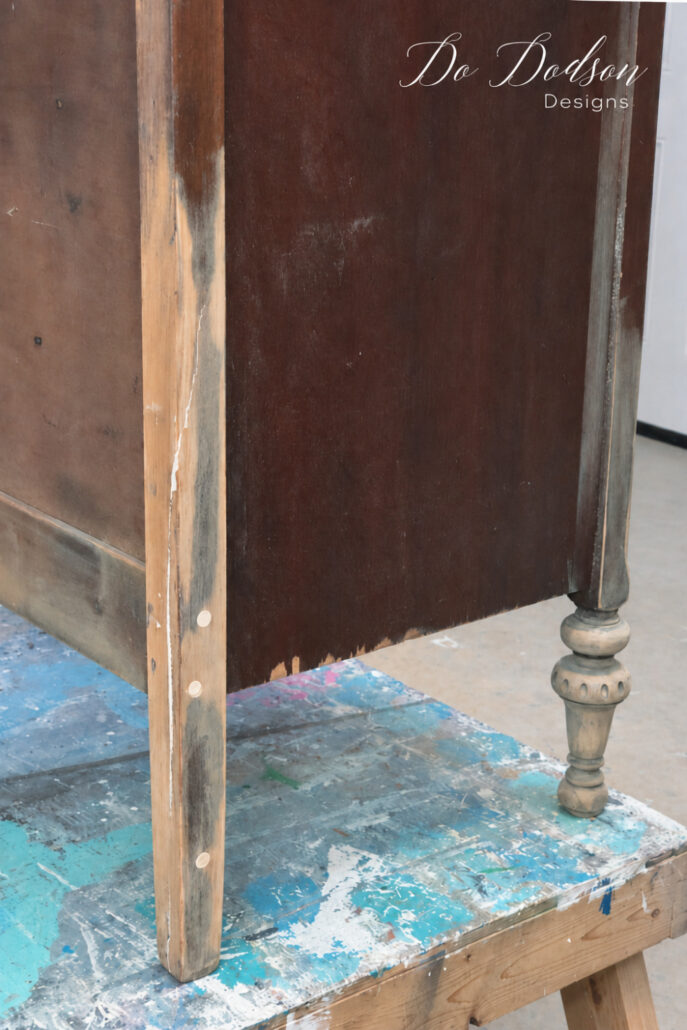
I tapped each dowel into its hole until the end sat just below the surface of the leg. That left enough room for a thin layer of wood filler to hide the dowel ends.
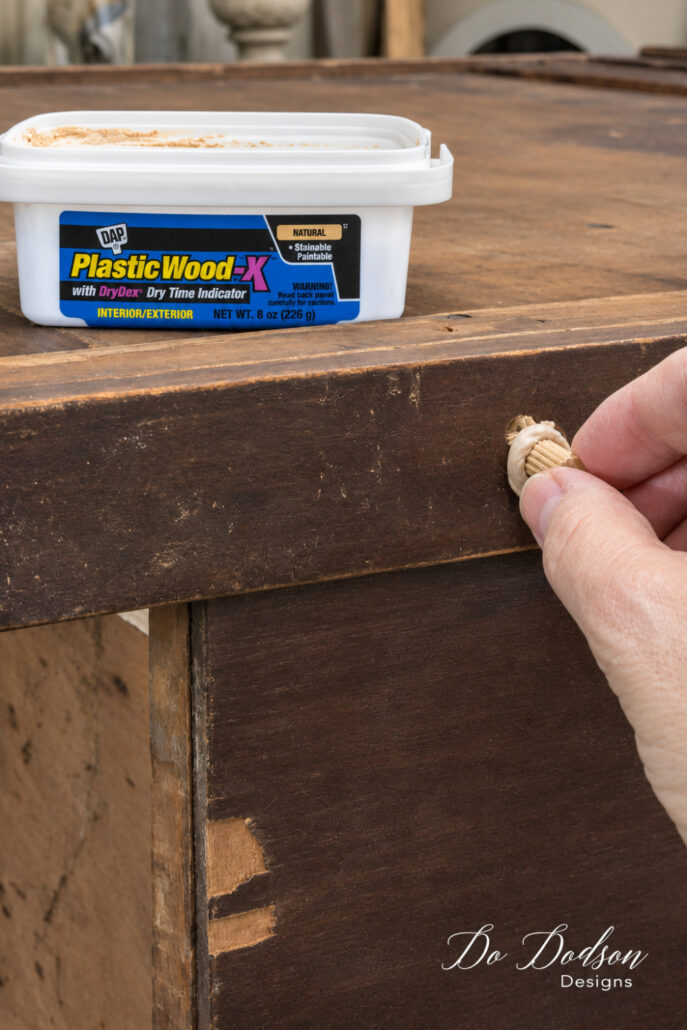
I covered the recessed dowel ends with wood filler and let it dry. Then I sanded the filler flush with the surface of the leg. Ta-da! The dresser leg was ready for paint.

Good as new! Well, that took care of the split leg. This dresser still had some chipped wood that needed fixing before I could paint it. If you’re working on a janky dresser of your own, here’s how I repaired the chipped wood with Bondo. This poor dresser sure kept me busy!
If you love rescuing these old pieces, save 📌 this for the next time a janky dresser follows you home. It happens to me more than I care to admit!
Have you ever brought home a piece of furniture that needed a little more fixing than you bargained for? Tell me what you found when you got it home. I love hearing about furniture rescues!
Oh yeah, if you want to see how this janky dresser looks like now, check out the Restoration Hardware–inspired finish I gave it.
Thanks for stopping by and I hope you learned a little something about repairing broken/split wood dresser legs. It’s totally doable and the results may just surprise you.
Until the next project… xo, Do
Awesome Do! Love the fix on this leg. Great ideas, thanks for sharing.
Yes, ma’am! Thanks for stopping by. 🙂 xo
I love those ragamuffins too…lol. Great fix my friend. XO
Ragamuffins… lol, I love it! Thanks, friend. xo, Do
You flow efficienrly with assurance!
Your tutorial assured my steps to redo an old Lincoln desk!! Yep I kept it!
TY!
Yay, Grace! You can do this! And just think how proud you’ll be once you fix it. Lincoln desks have long legs, right? Let me know how it turns out. 🙂 xo
Love your detailed information regarding repairing the broken leg on a dresser. How do you fix a dresser drawer that
won’t stay down in the back when you pull the drawer out? Almost like a track or a break at the back? Not sure if this explanation is clear but, would love a visual on how to repair it. Thank you
Hi Mary,
Without having a good visual, it’s hard to know the exact problem. It does sound like a track but that depends on the age of the piece. Some dressers don’t have tracks and it could be a structural issue. I would suggest laying it on its back and removing the drawers. This is a great way to diagnose those issues. Good luck with your project. 🙂 xo
4 years later and I found this when I am in need. I have a vanity with a smaller crack in the leg but the part that worries me is it has an antique caster for it. I would like to reinstall it because it is super heavy and the wheels moving would be amazing. In addition I would also like to add two legs to the back where I can’t tell if they were sawed and sanded off or if intentionally left off. The front has the center legs but the back does not. Any thoughts? I am definitely going to use your process for the repair for now. I thought if I filled it in I could redrill for the caster.
Hi Sarah! You absolutely can drill into the filler when it’s dried. Bondo dries super hard. If it’s good enough for car repairs, I’m certain it would work for a caster. I’m glad you found me. Be sure to sign up for my weekly emails so you never miss a new project. Thanks for reading.
xo Do
I have what turned out to be the bottom half of a dresser. I bought it many years ago for $25, and the seller threw in an old mirror and frame. The dresser was painted white. I didn’t know the top was some kind of particle board type stuff until I stripped the paint off. the dresser was solid oak (except for the top) with walnut veneer on the drawer fronts that had a black striping type trim. I purchased a piece of birch plywood and my dad helped me make a top from it. My brother hand re-painted the black striping on the drawer fronts. I stained and finished it with satin polyurethane. I have been using this dresser for 40+ years. Oh, the mirror frame was from the 1840’s or so. It had the original mirror in it (that crumbled when I removed it). So I cleaned it up, bought a piece of mirror to replace the original, sealed it with polyurethane and it hangs on the wall above the dresser. I love doing refinishing as you never know what you will find under all the old dirt and paint!
Hi Sherry!
I love hearing about others transformations. You did a great job salvaging this one. For me, it’s the journey of unknown territory. Thank you so much for sharing. 🙂
Let’s explore this topic even more—what are your thoughts?