
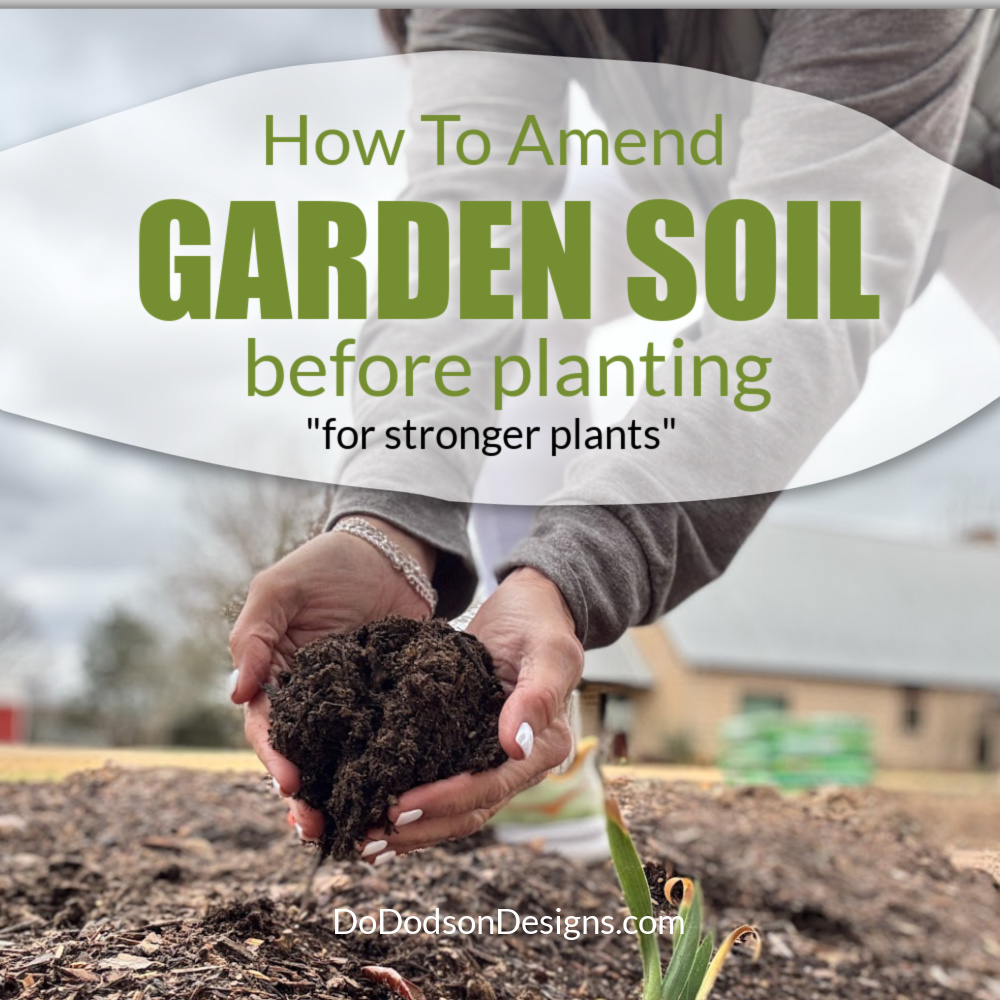


Hey, gardening buddy! Did you know healthy soil is the foundation of every thriving garden? Whether you’re growing flowers, vegetables, or herbs, amending your soil before planting improves drainage, boosts nutrients, and helps roots grow strong from the start. With a little prep work now, you’ll see better growth, fewer problems, and more productive plants all season long with these garden bed preparation tips.
Here’s how to properly amend your garden soil before planting.
* As an Amazon Associate, I earn from qualifying purchases and through other companies as well. You will not be charged extra when you purchase through these affiliate links, but any income I make helps me create more amazing DIY projects to share with you! To see my full disclaimer, click here!
Why Soil Amendment Matters
Most garden soil lacks the ideal balance of nutrients, structure, and organic matter plants need. That’s why it’s important to create an environment in which the plants will thrive.
Amending your soil helps:
- Improve drainage in heavy clay soil
- Help sandy soil retain moisture and nutrients
- Increase beneficial microbial activity
- Provide essential nutrients for plant growth
- Create a loose, root-friendly environment
Step 1: Test Your Soil First
Before adding anything, understand what your soil actually needs.
Options:
- Use an at-home soil test kit
- Send a sample to a local extension office
Look for:
- pH level
- Nitrogen, phosphorus, and potassium levels
- Soil type (clay, sand, loam)
This prevents over-amending and saves you money for more plants!
Step 2: Identify Your Soil Type
Different soils need different improvements.
Clay soil: heavy, sticky, poor drainage
Sandy soil: drains fast, low nutrients
Loamy soil: ideal balance, still benefits from organic matter
Knowing your soil type helps you choose the right amendments.
Step 3: Add Organic Matter (The Most Important Step)
Organic matter improves nearly every soil type. This is my go-to.
Best options:
- Compost
- Aged manure
- Leaf mold
- Worm castings
How much to add:
Spread 2–4 inches over the surface and work it into the top 6–10 inches of soil.
Benefits:
- Feeds soil microbes
- Improves moisture retention
- Adds nutrients naturally
- Enhances soil texture

Step 4: Improve Drainage or Moisture Retention
Adjust based on your soil’s needs.
For clay soil:
- Compost
- Pine bark fines
- Gypsum (if recommended)
For sandy soil:
- Compost
- Coconut coir
- Peat moss (use sparingly)
Goal: create soil that holds moisture but drains well.
Step 5: Add Targeted Nutrients
Once organic matter is added, supplement with nutrients if needed.
Common natural amendments:
- Bone meal (phosphorus for roots)
- Blood meal (nitrogen for leafy growth)
- Greensand (potassium and minerals)
- Wood ash (raises pH, adds potassium)
Always follow label directions.

Step 6: Loosen and Mix the Soil
Use a shovel, garden fork, garden rake, or tiller to mix amendments evenly.

Tips:
- Work the soil when slightly moist—not wet
- Break up compacted areas
- Mix amendments into the top 6–10 inches
This creates a soft planting environment for roots.
Step 7: Let Soil Rest Before Planting
After amending:
- Water lightly
- Let the soil settle for a few days to a week
This allows microbes to activate and nutrients to begin breaking down.

Step 8: Add Mulch After Planting
Mulch protects your newly improved, amended soil.
Benefits:
- Retains moisture
- Prevents erosion
- Suppresses weeds
- Adds organic matter over time
Use:
- Straw
- Bark
- Shredded leaves
- Grass clippings (dry)

Pro Tips for Long-Term Soil Health
- Amend the soil every season, not just once
- Add compost annually
- Rotate crops to prevent nutrient depletion
- Avoid over-tilling (destroys soil structure)
- Keep soil covered with mulch or plants year-round
Keep your soil happy with regular TLC!
Takeaways | Amending Soil Before Planting A Garden
Amending your garden soil before planting doesn’t have to be hard. It’s one of the most important steps you can take for a successful garden. By improving soil structure, nutrients, and moisture balance, you create the perfect environment for plants to grow strong and productive. can also use these same tips to improve the soil in raised beds.
A little effort before planting leads to healthier plants, fewer problems, and bigger harvests all season long. You’ll be so happy you followed these gardening tips for better soil!
Whether you’re a beginner flower gardener or just want to step up your fresh veggie game, the benefits I promise will amaze you.
Love this post? Share it with a fellow green thumb, and don’t forget to pin these tips to your GARDEN board! Happy gardening! 🌱
Until the next project… xo, Do
Very, very helpful information. Treatment my flower beds probably could use. Livng in Minnesota it will be a while before I can prep my soil but will test it first when I do. Thank you!
Oh great, Joanne!
I’m so glad you found this helpful. It has been a game changer for my gardens. Wishing you warmer weather soon. You guys have been extra hammered with the cold and snow this year. Enjoy the rest of your week. xo