
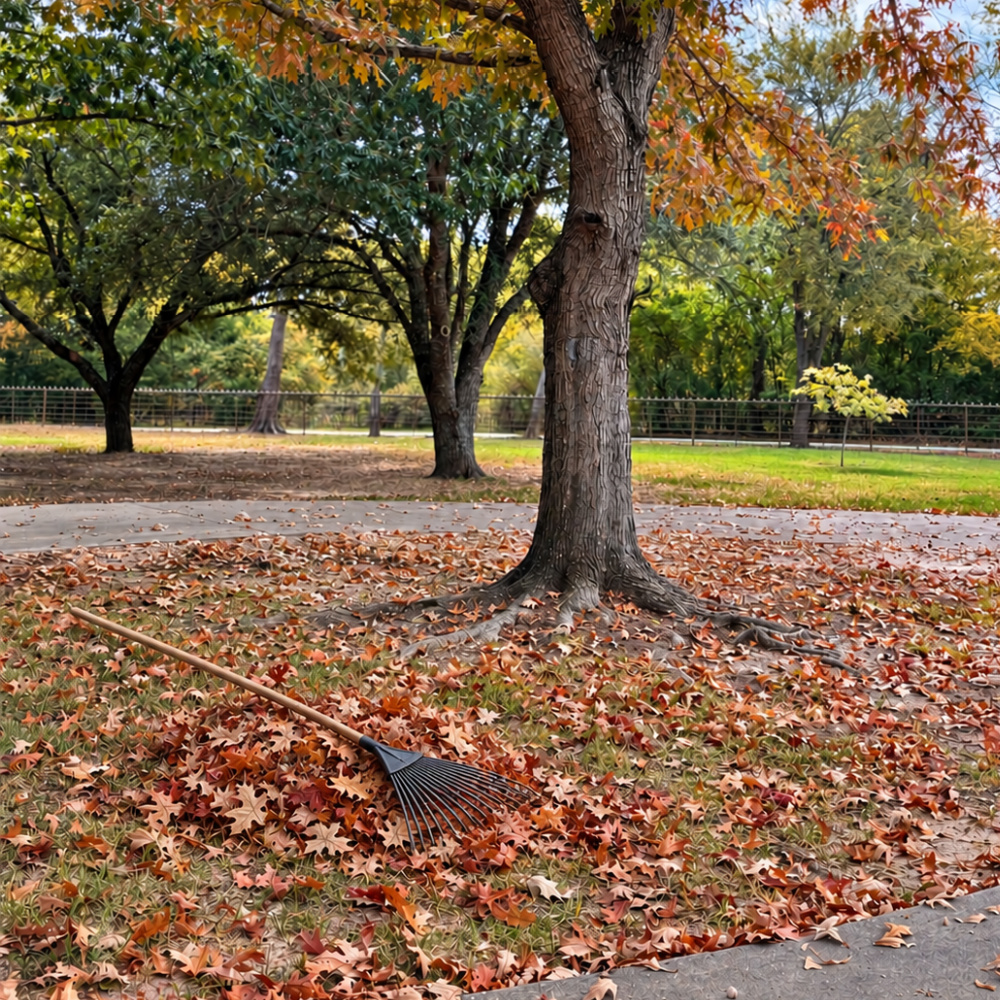

Every fall, some of my trees dump their laundry all over my yard. And just about the time I get things looking tidy, here comes another load. Apparently, they didn’t get the memo that I have other projects.
If you’re wondering what to do with fallen leaves, hauling every last one away isn’t your only option. Some can stay right in the garden, while others are better gathered up and put to work elsewhere.
The trick is knowing which leaves to leave and which ones need moving. We still want healthy grass, clear walkways, and a garden that looks reasonably cared for. But we can make a little room for the tiny creatures sharing it, too.
Let’s talk about where those leaves can do some good—and where a little cleanup is worth the effort.
* As an Amazon Associate, I earn from qualifying purchases and through other companies as well. You will not be charged extra when you purchase through these affiliate links, but any income I make helps me create more amazing DIY projects to share with you! To see my full disclaimer, click here!
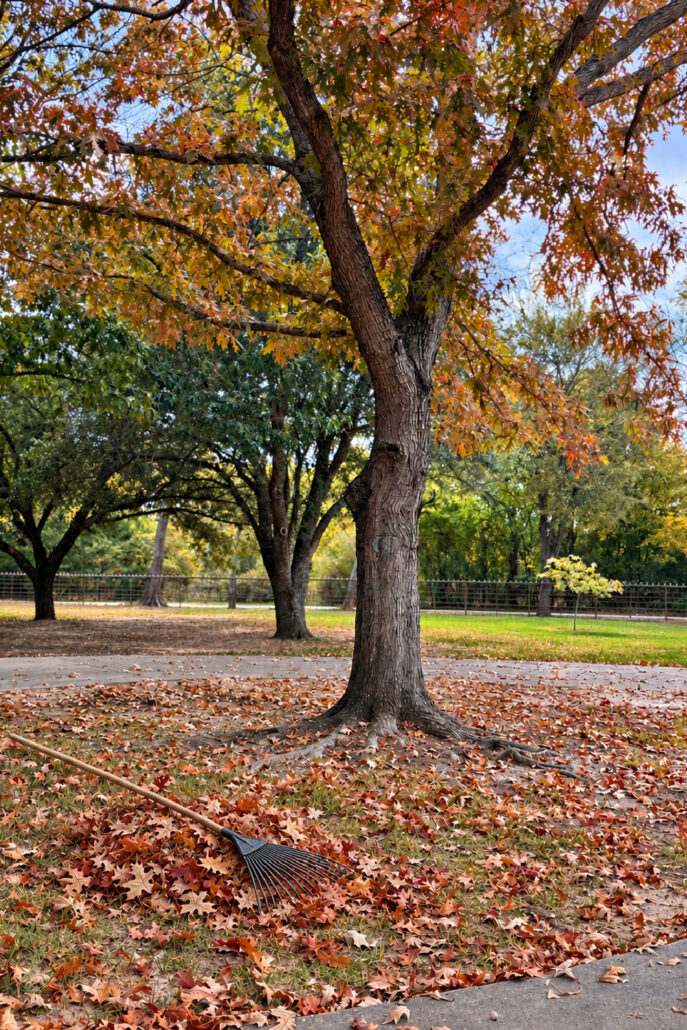
Should You Rake Leaves or Leave Them?
A little of both. You don’t have to chase down every leaf, but you don’t want a thick, soggy blanket covering your grass either.
On the lawn, clear heavy layers that block sunlight and smother the grass. A light scattering can often be chopped into small pieces with a mulching mower, provided the pieces settle down between the grass blades.
In garden beds and quieter corners of the yard, some leaves can stay. They help cover the soil and provide shelter for overwintering insects. Keep them from piling against tree trunks or covering the crowns of plants.
Clear your walkways and drainage areas, too. Wet leaves can get slippery, and a clogged drain is nobody’s idea of a fun fall project.
Think of it as a little selective housekeeping. The yard can look cared for without removing every last bit of what nature left behind.
Put Fallen Leaves to Work in Your Garden Beds
Before you bag up those leaves, take a look at your flowerbeds. Some of what you’re hauling away could be useful right there at home. Free garden material? Now you’re talking my language.
A loose layer of leaves helps protect bare soil, slow moisture loss, and reduce temperature swings. As the leaves break down, they add organic matter to the soil.
The key is to keep them from forming a thick, soggy mat. Leave some breathing room around plant crowns—the spot where the stems meet the soil—and keep leaves pulled back from tree trunks. Small plants shouldn’t disappear beneath a blanket of leaves.
For a tidier mulch around established plants, shredded leaves are easier to spread. But there’s a reason to leave some whole leaves undisturbed, too: insects may already be tucked inside or beneath them for winter.
You can keep a quiet corner beneath shrubs or along a wooded edge for those whole leaves, while using shredded excess elsewhere. A useful garden doesn’t have to look perfectly swept. Thankfully, mine has other plans.
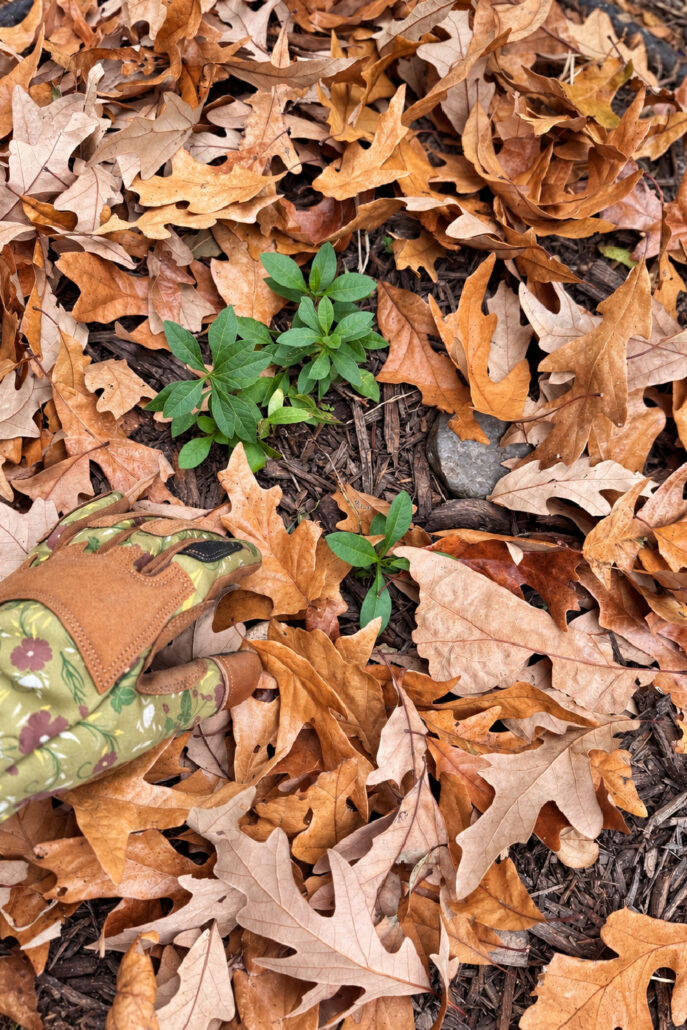
Wear Gloves and Look Before You Reach
Before you start moving leaves, put on sturdy gardening gloves and take a look at where you’re working. Leaf piles can conceal snakes and other wildlife seeking shelter, especially as the weather cools.
Use a rake to gently move leaves before reaching into places you can’t see. Gloves are useful for scratches and rough debris, but they don’t make your hands snake-proof.
If you spot a snake, give it space and let it move along. I’m all for sharing the garden, but we don’t need to hold hands.
Add Extra Leaves to Your Compost
If you still have more leaves than your garden beds can use, composting gives them another purpose. No sense sending away perfectly good material when you’re going to want compost later.
Dry leaves count as “browns,” the carbon-rich part of a compost pile. Mix them with “greens,” such as vegetable scraps, coffee grounds, or fresh grass clippings. Alternate and mix the materials rather than dumping in one thick layer of leaves.
Keep the pile about as damp as a wrung-out sponge, and turn it occasionally to introduce air. Shredding excess leaves before adding them can help them break down faster. Oak leaves can take their sweet time, so a little patience helps, too.
You can also set aside some dry leaves near your compost bin to mix in whenever you add kitchen scraps. Think of it as stocking the pantry for your compost pile. Finally, a reason to save something that doesn’t require another shelf in the house.
Leave a Little Shelter for Garden Wildlife
Some of those fallen leaves may already have tenants. Certain butterflies, moths, and other helpful insects, as well as toads and frogs, spend part of their life cycle in or beneath leaf litter. Birds may forage there for food, too.
Leaving a patch of whole leaves beneath shrubs or along a wooded edge gives these garden neighbors a place to shelter. Choose a spot where leaves won’t smother your lawn, bury small plants, or wash into a drain.
For this little habitat area, skip the mower and shredder. Keep the leaves loose and let them settle naturally.
When spring arrives, resist the urge to clear everything at the first warm afternoon. Different insects emerge at different times, and leaves in an out-of-the-way spot can stay and gradually break down.
That’s part of what I love about the garden we share. Sometimes helping means planting something. Sometimes it means putting down the rake and letting a small corner be.
Want to make another little hideaway for your garden neighbors? My DIY bug house is a fun project that puts natural materials to work. Apparently, I’m in the hospitality business now.
A Little Fall Cleanup Can Go a Long Way
Deciding what to do with fallen leaves doesn’t have to mean choosing between a spotless yard and letting everything go wild.
Clear the paths, keep drainage areas open, and move thick layers off the grass. Put some leaves to work in your garden beds or compost, and leave a quiet patch for the little creatures sharing your space.
Save this pin 📌in your Fall Gardening Pinterest board for your next fall yard day—because those leaves aren’t going to rake themselves, but a few can stay and earn their keep.

Once you’ve put those leaves to work, take a peek at my 18 Creative Inspirational Garden Ideas for your next outdoor project. Because apparently, finishing one garden chore is my cue to dream up three more.
Here in my East Texas yard, there will always be another leaf falling before I get the rake put away. I might as well make a few of them useful.
And if leaving a little shelter for wildlife means one less thing on my chore list? Well, I’m willing to make that sacrifice.
Do you rake every leaf, mulch them with your mower, or save some for the garden? Tell me in the comments. I’d love to hear what works in your yard.
Don’t forget to share this with a gardening buddy who’s knee-deep in leaves. You might save them a little work—and give them a good excuse to put down the rake!
Until the next project… xo, Do
Great fall tips my friend and I do ALL three! Love mulching with my mower and using some for garden cover over our freezing cold winters… expecially for my climbing roses. We also have garden bulk p/u where I can have the excess picked up and the city turns it into compost. Win win! 🍂🍂🍂 Enjoy your weekend! XOXO
Wow! That is wonderful service to have. We “I” sure could use some of that compost. Mine takes forever to break down. We have a lot of live oaks, and those leaves are tough as nails. Thanks for reading, Denise. Enjoy the rest of your weekend. 🙂